

Great Pyramid of Giza: The Last Wonder of the Ancient World
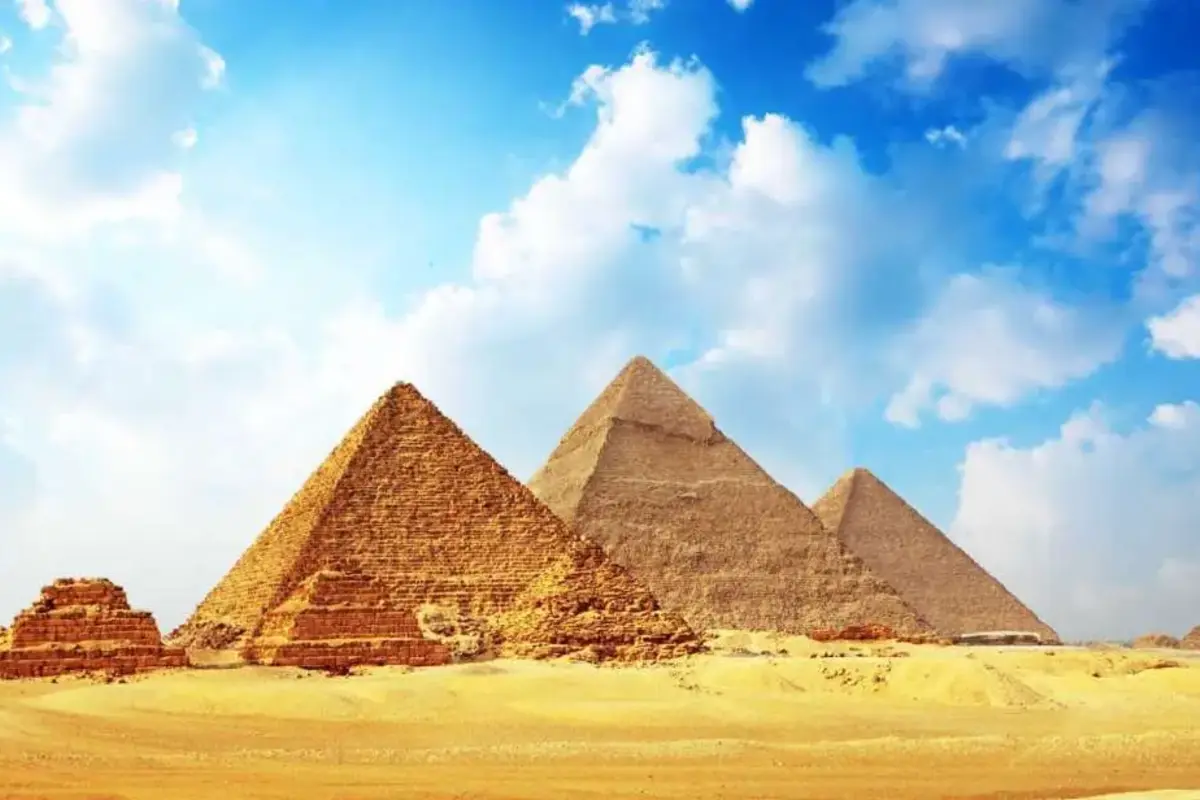
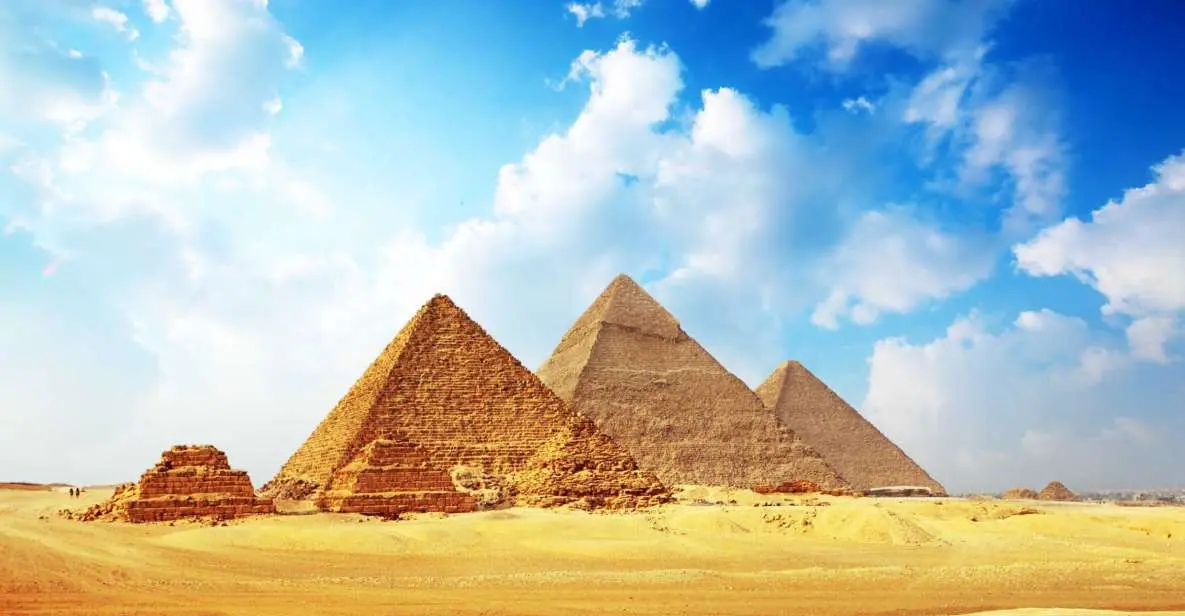
Standing proudly on the Giza Plateau near Cairo, the Great Pyramid of Giza is one of the world's most extraordinary monuments and the only surviving Wonder of the Ancient World. Built more than 4,500 years ago during Egypt's Fourth Dynasty, this remarkable structure has fascinated historians, archaeologists, engineers, and travelers for centuries. Its enormous size, incredible precision, and mysterious construction continue to inspire admiration and curiosity, making it one of the most visited attractions in Egypt.
Also known as the Pyramid of Khufu or the Pyramid of Cheops, the Great Pyramid was constructed as the eternal resting place of Pharaoh Khufu, who ruled Egypt between approximately 2589 and 2566 BC. It originally stood at an impressive 146.6 meters (481 feet), making it the tallest man-made structure on Earth for nearly four millennia. Even today, after losing its smooth limestone casing and pyramidion, it remains an astonishing 138.8 meters (455 feet) high.
Built using an estimated 2.3 million limestone and granite blocks, each weighing between two and eighty tons, the pyramid demonstrates an extraordinary level of planning, mathematics, and engineering. Despite decades of scientific research, many questions surrounding its construction remain unanswered, adding to its legendary status.
The Great Pyramid forms the centerpiece of the Giza Necropolis, a UNESCO World Heritage Site that also includes the Great Sphinx of Giza, the pyramids of Khafre and Menkaure, royal queens' pyramids, ancient temples, and workers' tombs. Together, these monuments provide an exceptional glimpse into the beliefs, achievements, and daily life of one of history's greatest civilizations.
Visiting the Great Pyramid offers much more than simply viewing an ancient monument. Travelers can walk around its enormous base, marvel at the precision of its massive stone blocks, enter its narrow passageways to reach the King's Chamber, and enjoy breathtaking panoramic views across the Giza Plateau. Whether you're passionate about archaeology, architecture, photography, or simply seeking one of the world's greatest travel experiences, the Great Pyramid of Giza is an unforgettable destination that belongs on every Egypt itinerary.
History of the Great Pyramid of Giza
The story of the Great Pyramid begins more than four and a half thousand years ago during the golden age of Egypt's Old Kingdom, often referred to as the "Age of the Pyramid Builders." This period witnessed remarkable advances in architecture, engineering, religion, and centralized government under the powerful pharaohs of the Fourth Dynasty.
Pharaoh Khufu, known to the ancient Greeks as Cheops, inherited a prosperous and well-organized kingdom from his father, King Sneferu. Sneferu revolutionized pyramid construction by building the Meidum Pyramid, the Bent Pyramid, and the Red Pyramid, laying the architectural foundations that made the Great Pyramid possible. Building upon these innovations, Khufu commissioned what would become the largest pyramid ever constructed.
Construction is believed to have started around 2580 BC and continued for approximately 20 to 25 years. Contrary to popular myths, the pyramid was not built by slaves. Archaeological discoveries have revealed that the workforce consisted of thousands of skilled craftsmen, engineers, stonemasons, surveyors, and seasonal laborers who worked in organized teams. They lived in purpose-built workers' villages near the construction site, where they received food, medical care, and accommodation supplied by the royal administration.
The limestone used for the pyramid's core was quarried directly from the Giza Plateau, while the smooth white casing stones were transported from the fine limestone quarries of Tura on the eastern bank of the Nile. Massive granite blocks weighing up to eighty tons were brought from Aswan, nearly 900 kilometers south of Giza, demonstrating the remarkable logistical capabilities of ancient Egypt.
Originally, the pyramid was covered with highly polished white limestone casing stones that reflected sunlight brilliantly, making the monument shine across the surrounding desert. Ancient writers described the pyramid as dazzling in appearance, almost glowing beneath the Egyptian sun. Over the centuries, earthquakes and human activity removed most of these casing stones, many of which were later reused in medieval Cairo's buildings and mosques.
Inside the pyramid, a sophisticated network of corridors and chambers was carefully designed to protect the pharaoh's burial chamber and symbolize his journey into the afterlife. The King's Chamber, built entirely of red granite, housed Khufu's sarcophagus and represented the spiritual heart of the monument. The Grand Gallery, one of the most impressive architectural features within the pyramid, rises more than eight meters high and continues to amaze visitors with its precision and craftsmanship.
The Great Pyramid remained the tallest structure ever built by humanity for nearly 3,800 years, a record that stood until the construction of Lincoln Cathedral in England during the medieval period. Today, despite centuries of weathering, earthquakes, and the removal of its outer casing, the monument continues to dominate the Giza skyline as a symbol of Egypt's enduring civilization and one of humanity's greatest engineering achievements.
Every year, millions of visitors from around the world come to witness the Great Pyramid, standing in awe before a monument that has survived empires, invasions, natural disasters, and the passage of time. It remains not only Egypt's most famous attraction but also one of the most recognizable and inspiring landmarks on Earth.
Architecture and Engineering of the Great Pyramid of Giza
The Great Pyramid of Giza is one of the most remarkable engineering achievements in human history. Even after more than 4,500 years, architects, engineers, and archaeologists continue to study its design, precision, and construction methods. Every aspect of the pyramid demonstrates an extraordinary understanding of mathematics, geometry, astronomy, and large-scale project management that was far ahead of its time.
Originally standing at 146.6 meters (481 feet), the Great Pyramid was the tallest man-made structure on Earth for nearly 3,800 years. Today, after the loss of its polished limestone casing stones and pyramidion (capstone), it stands at approximately 138.8 meters (455 feet).
The base of the pyramid measures approximately 230.4 meters (756 feet) on each side, covering an area of more than 13 acres (5.3 hectares). Despite being built thousands of years ago, the difference in length between the four sides is only a few centimeters, showcasing an astonishing level of precision.
One of the pyramid's greatest architectural achievements is its nearly perfect alignment with the four cardinal directions—north, south, east, and west. Modern surveys have shown that the error is incredibly small, proving that ancient Egyptian surveyors possessed advanced knowledge of astronomy and careful measuring techniques.
How Was the Great Pyramid Built?
The construction of the Great Pyramid remains one of history's greatest mysteries. Although archaeologists have developed several theories, no ancient document describes the exact building process.
Most experts agree that construction began around 2580 BC and took approximately 20 to 25 years to complete. During this period, tens of thousands of skilled workers collaborated to create one of the world's greatest monuments.
Contrary to the long-standing myth, the pyramid was not built by slaves. Excavations carried out near the Giza Plateau uncovered workers' villages, bakeries, breweries, workshops, and cemeteries. These discoveries indicate that the labor force consisted of skilled craftsmen, stonecutters, engineers, surveyors, carpenters, and seasonal workers who were well-fed and respected for their contribution to the king's eternal monument.
The pyramid contains approximately 2.3 million limestone and granite blocks, with an average weight of 2.5 tons. Some granite blocks used in the King's Chamber weigh more than 70 tons and were transported from the granite quarries of Aswan, nearly 900 kilometers (560 miles) south of Giza.
Most of the limestone blocks were quarried directly from the Giza Plateau, reducing transportation time. The fine white limestone casing stones were brought from Tura, while the granite was transported along the Nile River on specially designed boats before being hauled to the construction site.
Construction Theories
Although the exact construction method remains uncertain, archaeologists generally support several major theories.
Straight Ramp Theory
One of the earliest theories suggests that workers built a massive straight earthen ramp leading to the growing pyramid. Stone blocks were dragged on wooden sledges across wet sand to reduce friction before being pulled upward.
While simple in concept, many researchers believe such a ramp would have required an enormous amount of material, possibly larger than the pyramid itself.
Zigzag and Spiral Ramps
Another theory proposes that ramps wrapped around the pyramid in a zigzag or spiral pattern as construction progressed. This would have required far less material while allowing workers to continue lifting blocks to increasing heights.
Many archaeologists consider this one of the more practical explanations.
Internal Ramp Theory
French architect Jean-Pierre Houdin proposed that much of the pyramid may have been constructed using an internal spiral ramp hidden inside the monument itself.
According to this theory, workers transported stones through internal corridors that remain largely concealed within the pyramid's structure. Although intriguing, this hypothesis continues to be debated among researchers.
Regardless of the exact method, the Great Pyramid represents an extraordinary achievement in organization, engineering, and manpower that has never been fully replicated using ancient technology.
Inside the Great Pyramid
Although the exterior is breathtaking, the interior of the Great Pyramid offers visitors an unforgettable glimpse into ancient Egyptian engineering.
Unlike many people expect, the interior contains no elaborate wall paintings or colorful decorations. Instead, visitors encounter narrow corridors, steep passageways, and impressive granite chambers that have survived for thousands of years.
The Descending Passage
The first passage slopes downward into the bedrock beneath the pyramid, leading toward an unfinished underground chamber. Archaeologists continue to debate the purpose of this chamber.
The Ascending Passage
Branching from the descending corridor is the ascending passage, which leads visitors toward the pyramid's upper chambers.
The Grand Gallery
The Grand Gallery is one of the pyramid's most impressive architectural features.
Measuring nearly 47 meters (154 feet) long and over 8 meters (26 feet) high, this magnificent corridor demonstrates extraordinary precision. Its corbelled ceiling gradually narrows upward, creating one of ancient Egypt's greatest architectural masterpieces.
The King's Chamber
At the heart of the pyramid lies the King's Chamber.
Constructed entirely from enormous granite blocks transported from Aswan, it contains the granite sarcophagus believed to have held Pharaoh Khufu's mummy.
Above the chamber are five relieving chambers designed to distribute the pyramid's tremendous weight and protect the burial chamber from collapse.
The Queen's Chamber
Located below the King's Chamber, the Queen's Chamber may never have housed a queen. Its exact purpose remains uncertain, although some scholars believe it served a symbolic religious function.
Fascinating Facts About the Great Pyramid
- It is the only surviving Wonder of the Ancient World.
- It remained the tallest building on Earth for almost 3,800 years.
- More than 2.3 million stone blocks were used in its construction.
- The total weight of the pyramid exceeds 6 million tons.
- Its sides are aligned almost perfectly with the cardinal directions.
- The polished limestone casing stones once reflected sunlight, making the pyramid visible from great distances.
- Modern technology continues to discover hidden voids and unexplored spaces inside the pyramid, revealing that there is still much to learn about this incredible monument.
Planning Your Visit to the Great Pyramid of Giza
A visit to the Great Pyramid of Giza is an unforgettable experience and one of the highlights of any trip to Egypt. Located on the famous Giza Plateau, just 15 kilometers (9 miles) southwest of downtown Cairo, the pyramid is easily accessible and can be explored in just a few hours or as part of a full-day tour of the Giza archaeological site.
Whether you are interested in ancient history, photography, architecture, or archaeology, planning your visit in advance will help you make the most of your time at this incredible UNESCO World Heritage Site.
Opening Hours
The Giza Pyramid Complex is open every day throughout the year.
Summer (April–September)
7:00 AM – 7:00 PM
Winter (October–March)
8:00 AM – 5:00 PM
Opening hours may vary during public holidays and the holy month of Ramadan, so it's always a good idea to check the latest schedule before your visit.
Ticket Prices
Visitors must purchase an entrance ticket to enter the Giza Plateau. A separate ticket is required if you wish to enter the interior of the Great Pyramid.
Ticket prices are occasionally updated by the Egyptian authorities, so check the latest official rates before your visit.
Your ticket may also include access to other archaeological areas within the pyramid complex, depending on the type of ticket purchased.
Best Time to Visit
The best months to visit the Great Pyramid are between October and April, when temperatures are cooler and sightseeing is more comfortable.
During summer, temperatures often exceed 40°C (104°F), especially in the afternoon.
For the best experience:
- Arrive shortly after opening.
- Visit before large tour groups arrive.
- Enjoy softer lighting for photography.
- Experience cooler temperatures.
Sunrise and early morning provide the most spectacular views across the Giza Plateau.
How to Get to the Great Pyramid
The Great Pyramid is located on the western edge of Cairo and is easily reached from anywhere in the city.
By Private Tour
A private guided tour is the most comfortable and informative option. Most tours include:
- Hotel pickup and drop-off.
- Private air-conditioned vehicle.
- Professional Egyptologist guide.
- Flexible sightseeing schedule.
By Taxi or Ride-Hailing Apps
Uber and local taxis operate throughout Cairo and provide easy access to the pyramids.
By Public Transportation
Budget travelers can reach Giza using Cairo Metro combined with local buses or taxis.
What to Expect During Your Visit
The Great Pyramid is far larger than most visitors imagine.
Walking around its enormous base allows you to appreciate the incredible size of each limestone block.
Many visitors choose to enter the pyramid's interior. The climb involves walking through narrow ascending tunnels before reaching the King's Chamber.
Although physically manageable for most people, the interior passageways can feel:
- Warm
- Narrow
- Steep
- Crowded during busy periods
Visitors with claustrophobia or limited mobility may prefer to admire the monument from outside.
Photography Tips
The Great Pyramid is one of the world's most photographed landmarks.
For the best photographs:
- Visit early in the morning.
- Use wide-angle lenses.
- Walk further into the desert for panoramic views.
- Capture the pyramid together with the Great Sphinx.
- Stay until sunset for beautiful golden light.
Drone photography is generally prohibited without official permission.
Accessibility
The Giza Plateau has improved visitor facilities in recent years.
However, due to uneven terrain, sand, and ancient pathways, some areas remain challenging for wheelchair users.
Entering the Great Pyramid requires climbing steep, narrow passageways and is not accessible for visitors with mobility difficulties.
Visitor Tips
To enjoy the best experience:
- Wear comfortable walking shoes.
- Bring sunglasses and sunscreen.
- Carry bottled water.
- Wear a hat during warmer months.
- Keep your entrance ticket with you.
- Respect archaeological barriers.
- Avoid climbing on the monuments.
- Purchase tickets only from official ticket offices or oline.
- Be cautious of unofficial vendors and animal ride operators.
Hiring a licensed Egyptologist guide greatly enhances your understanding of the site's history and significance.
Nearby Attractions
The Great Pyramid is surrounded by some of Egypt's most famous archaeological treasures.
Great Sphinx of Giza
Standing beside the pyramids, the Great Sphinx is one of Egypt's most recognizable monuments and has guarded the plateau for thousands of years.
Pyramid of Khafre
The second-largest pyramid, distinguished by the remaining limestone casing stones near its summit.
Pyramid of Menkaure
The smallest of the three main pyramids, yet equally fascinating for visitors interested in ancient Egyptian architecture.
Queens' Pyramids
Smaller pyramids built for members of the royal family.
Grand Egyptian Museum
One of the world's largest archaeological museums, displaying thousands of ancient Egyptian artifacts, including treasures from the tomb of Tutankhamun.
Saqqara
Home to the famous Step Pyramid of Djoser, considered the world's oldest large-scale stone monument.
Memphis
The ancient capital of Egypt, featuring remarkable statues, temples, and archaeological remains.
Recommended Tours
The Great Pyramid is included in many of our best-selling tours, including:
Giza Pyramids, Sphinx & Grand Egyptian Museum Tour
8-Day Cairo, Nile Cruise & Abu Simbel Tour
Family Egypt Vacation Packages
Booking a guided tour allows visitors to gain a deeper understanding of the history, legends, and secrets surrounding this extraordinary monument while enjoying a comfortable and well-organized travel experience.
The Great Pyramid in Ancient Egyptian Religion
For the ancient Egyptians, the Great Pyramid of Giza was far more than an impressive building. It was a sacred monument designed to ensure the eternal life of Pharaoh Khufu. Ancient Egyptians believed that death was not the end but the beginning of a new journey into the afterlife. The pyramid served as a gateway between the earthly world and the divine realm, where the king would join the gods and continue to protect Egypt forever.
According to Egyptian beliefs, the pharaoh was considered the earthly representative of the god Horus during his lifetime and became one with the sun god Ra after death. Every aspect of the Great Pyramid reflected these religious beliefs. Its towering shape is thought to symbolize the rays of the sun, allowing the pharaoh's spirit to ascend to the heavens.
Inside the pyramid, carefully designed chambers and passageways were intended to protect the king's body and provide everything he needed in the afterlife. Valuable treasures, food, furniture, clothing, jewelry, and religious objects would have accompanied the king's burial, although most were removed by tomb robbers thousands of years ago.
The pyramid was originally part of a much larger funerary complex that included temples, causeways, boat pits, and smaller pyramids for members of the royal family. Together, these structures formed one of the most important religious sites in ancient Egypt.
Myths and Legends
Over thousands of years, the Great Pyramid has inspired countless myths and mysteries.
One of the most common myths claims that aliens built the pyramid because ancient Egyptians supposedly lacked the technology. However, decades of archaeological discoveries—including workers' villages, ancient tools, construction ramps, and inscriptions left by builders—clearly demonstrate that the pyramid was built by skilled Egyptian craftsmen.
Another legend suggests the pyramid contains hidden treasures or secret chambers waiting to be discovered. Although several previously unknown voids have been detected using modern scanning technology, archaeologists continue to study these spaces carefully, and many questions remain unanswered.
Some people also believe the pyramid possesses mysterious energy or supernatural powers. While these stories add to its fascination, there is no scientific evidence supporting such claims. The true wonder of the Great Pyramid lies in the remarkable knowledge, organization, and craftsmanship of the civilization that built it more than 4,500 years ago.
Why the Great Pyramid Is One of the World's Greatest Wonders
The Great Pyramid has earned its reputation as one of humanity's greatest achievements for many reasons.
It is:
- The only surviving Wonder of the Ancient World.
- The largest pyramid ever constructed.
- A masterpiece of ancient engineering and architecture.
- A UNESCO World Heritage Site.
- One of the world's most visited archaeological attractions.
- A symbol of Egypt recognized across the globe.
More than four millennia after its construction, it continues to inspire architects, historians, engineers, and travelers from every corner of the world. Few places on Earth allow visitors to stand before a monument that has witnessed so much of human history.
Whether you are fascinated by archaeology, photography, architecture, or ancient civilizations, the Great Pyramid of Giza promises an unforgettable experience that will remain one of the highlights of your journey through Egypt.
Conclusion
The Great Pyramid of Giza is much more than Egypt's most famous landmark—it is a timeless symbol of human ingenuity, ambition, and cultural achievement. For over 4,500 years, this extraordinary monument has stood as a testament to the skill of ancient Egyptian builders and the enduring legacy of one of the world's greatest civilizations.
Whether you're exploring its immense exterior, walking through its ancient passageways, or admiring the breathtaking views across the Giza Plateau, every moment spent at the Great Pyramid is a journey into the heart of history.
No visit to Egypt is complete without experiencing this magnificent Wonder of the Ancient World. Combine your visit with the Great Sphinx of Giza, the Grand Egyptian Museum, Saqqara, and Memphis for a deeper understanding of Egypt's rich heritage. If you're looking for a seamless experience, explore our Cairo day tours, Egypt tour packages, and private guided tours, all designed to help you discover the country's most iconic landmarks with expert local guides.