

Karnak Temple
Karnak Temple is the largest and most impressive ancient religious complex ever built, standing as one of Egypt's greatest archaeological treasures. Located on the east bank of the Nile River in Luxor, ancient Thebes, Karnak was the spiritual heart of the New Kingdom and the most important center for the worship of Amun-Ra, the king of the ancient Egyptian gods.
Covering more than 100 hectares (247 acres), the Karnak Temple Complex is not a single temple but a vast collection of sanctuaries, pylons, chapels, obelisks, courtyards, sacred lakes, and colossal statues built over a period of nearly 2,000 years. Successive pharaohs, including Senusret I, Hatshepsut, Thutmose III, Seti I, Ramses II, and Ramses III, each contributed magnificent additions, creating one of the world's greatest open-air museums.
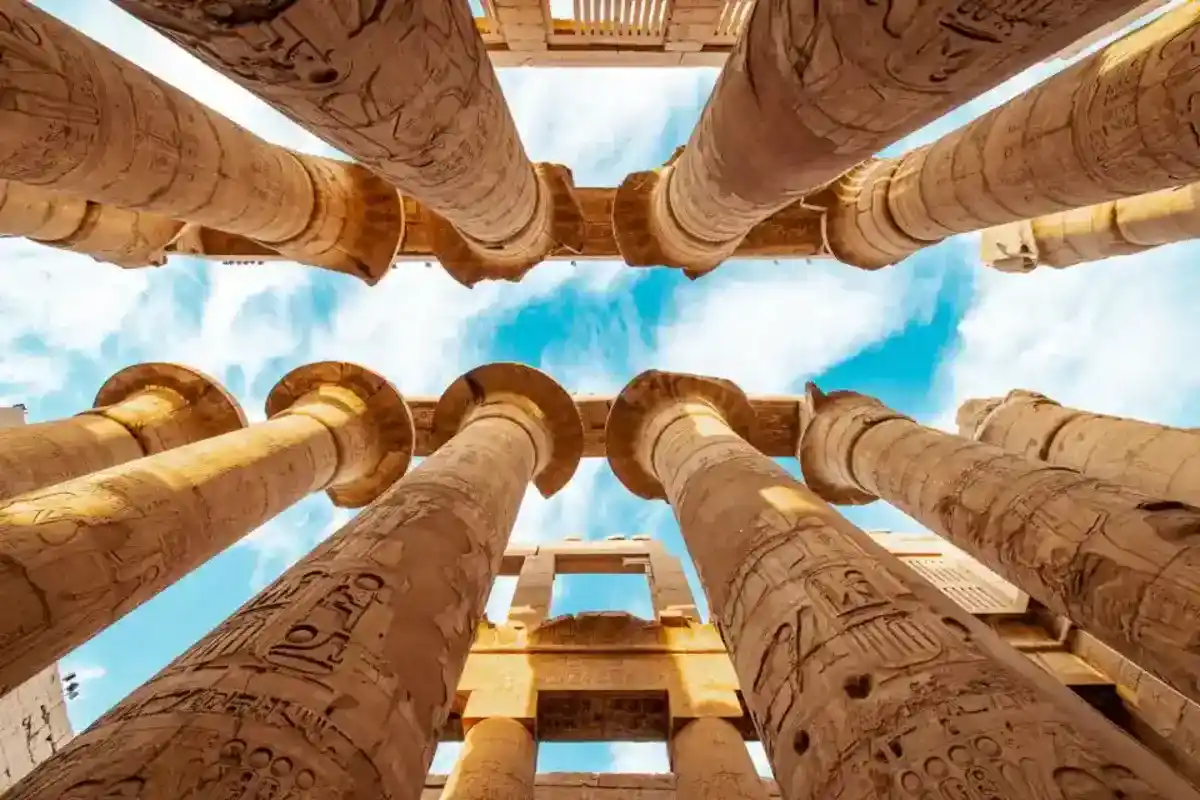
Among Karnak's most famous features is the breathtaking Great Hypostyle Hall, containing 134 massive sandstone columns, some rising over 21 meters (69 feet) high. Walking through this extraordinary hall is one of the most unforgettable experiences in Egypt, offering visitors a glimpse into the architectural brilliance and religious devotion of ancient Egyptian civilization.
Today, Karnak Temple is one of the country's most visited attractions and a UNESCO World Heritage Site as part of Ancient Thebes. Whether you are interested in history, archaeology, photography, or ancient religion, Karnak Temple is an essential stop on any Egypt itinerary.
History of Karnak Temple
The history of Karnak Temple spans almost two millennia, making it one of the longest continuously developed religious sites in the world. Construction began during the Middle Kingdom, around 2000 BC, but the majority of the complex visible today dates to the New Kingdom (1550–1070 BC), when Thebes became Egypt's capital and Amun-Ra rose to supreme importance.
Each generation of pharaohs sought to honor the gods while leaving a lasting legacy. Instead of replacing earlier structures, they expanded the complex by adding new pylons, temples, obelisks, chapels, and ceremonial avenues. This continuous expansion transformed Karnak into the largest temple complex ever constructed.
The temple was primarily dedicated to Amun-Ra, accompanied by his wife Mut and their son Khonsu, collectively known as the Theban Triad. Pilgrims, priests, and rulers traveled from across Egypt to worship here, believing Amun-Ra controlled creation, kingship, and the annual flooding of the Nile.
One of Karnak's most significant annual celebrations was the Opet Festival, during which the sacred statues of Amun, Mut, and Khonsu were carried in magnificent processions along the Avenue of Sphinxes from Karnak Temple to Luxor Temple. This festival symbolized renewal, divine kingship, and the close relationship between the gods and the reigning pharaoh.
Several famous rulers made remarkable contributions to Karnak:
- Senusret I built one of the earliest temples dedicated to Amun.
- Hatshepsut erected elegant granite obelisks, one of which still stands today.
- Thutmose III added the Festival Hall (Akh-Menu) and numerous chapels.
- Seti I and Ramses II completed the magnificent Great Hypostyle Hall.
- Ramses III constructed additional temples and gateways.
Following the decline of ancient Egyptian religion, Karnak gradually lost its importance. Earthquakes, floods, and centuries of neglect buried parts of the complex beneath sand and debris. Modern archaeological excavations and restoration projects have revealed its extraordinary monuments, allowing visitors to appreciate one of humanity's greatest architectural achievements.
The Great Hypostyle Hall
The Great Hypostyle Hall is undoubtedly the most famous part of Karnak Temple and one of the greatest architectural achievements of the ancient world. Covering an area of approximately 5,000 square meters (54,000 square feet), this magnificent hall was designed to impress all who entered the sacred precinct of Amun-Ra.
Construction began during the reign of Pharaoh Seti I (1290–1279 BC) and was completed by his son Ramses II (1279–1213 BC). Together, they created one of the most extraordinary religious spaces ever built.
The hall contains 134 massive sandstone columns arranged in 16 rows. The central twelve columns are the tallest, reaching nearly 21 meters (69 feet) in height with capitals shaped like open papyrus flowers. The remaining 122 columns stand approximately 10 meters (33 feet) tall and feature closed papyrus capitals, symbolizing the marshes from which, according to Egyptian mythology, creation first emerged.
Every column is covered with beautifully carved hieroglyphic inscriptions depicting royal ceremonies, religious rituals, offerings to the gods, and military victories. Although many of the original colors have faded, traces of red, blue, yellow, and green paint remain visible, offering visitors a glimpse of how vibrant the hall once appeared.
Walking through the Great Hypostyle Hall is one of the highlights of visiting Luxor. The towering columns create an atmosphere of awe that continues to inspire architects, historians, and travelers from around the world.
The Temple of Amun-Ra
At the heart of Karnak lies the Temple of Amun-Ra, the most sacred sanctuary within the entire complex.
Amun-Ra was regarded as the supreme deity during the New Kingdom, representing the creator of the universe, the sun, and divine kingship. Every Egyptian pharaoh sought to honor Amun by expanding Karnak, believing that the god granted them victory, prosperity, and legitimacy.
Only priests and the pharaoh were permitted to enter the innermost sanctuary, where the sacred statue of Amun was kept. Daily rituals included washing the statue, dressing it in fine linen, presenting food offerings, burning incense, and reciting sacred prayers.
During major religious festivals, the statue was placed on a ceremonial barque and carried in grand processions outside the sanctuary, allowing the god to symbolically visit other temples throughout Thebes.
Today, visitors can walk through the temple's courtyards, admire colossal statues of pharaohs, and imagine the elaborate ceremonies that once filled these sacred spaces with music, incense, and chanting priests.
Hatshepsut's Obelisks
Among Karnak's most impressive monuments are the granite obelisks commissioned by Queen Hatshepsut, one of Egypt's greatest female rulers.
Originally, Hatshepsut erected several obelisks within the Temple of Amun. The tallest surviving example still stands proudly at approximately 29.5 meters (97 feet) high and weighs an estimated 320 tons.
Carved from a single block of pink granite transported from the quarries of Aswan, the obelisk is covered with beautifully preserved hieroglyphs praising Amun-Ra and celebrating Hatshepsut's reign.
The obelisk originally featured a pyramid-shaped tip covered with electrum, a precious alloy of gold and silver, allowing it to shine brilliantly in the Egyptian sunlight.
Although later rulers attempted to conceal some of Hatshepsut's monuments after her death, her magnificent obelisk remains one of Karnak's most remarkable engineering achievements.
The Sacred Lake
Located south of the main temple buildings, the Sacred Lake is one of the best-preserved features of the Karnak Temple Complex.
Measuring approximately 120 meters by 77 meters, the lake was used by priests for ritual purification before performing religious ceremonies inside the temple.
The water was connected to the Nile through underground channels, ensuring a continuous supply throughout the year.
The Sacred Lake also played an important symbolic role in Egyptian religion. It represented the Primeval Waters of Creation, from which, according to ancient belief, the world first emerged.
Today, the lake provides one of the most peaceful areas within Karnak. Visitors often pause here to admire the surrounding ruins while enjoying beautiful reflections of the ancient monuments in the calm water.
The Avenue of Sphinxes
Connecting Karnak Temple with Luxor Temple is the famous Avenue of Sphinxes, one of ancient Egypt's most impressive ceremonial roads.
Stretching for approximately 2.7 kilometers (1.7 miles), the avenue is lined with hundreds of beautifully carved sphinx statues.
Some sphinxes feature the body of a lion with a ram's head, symbolizing the god Amun, while others display a human-headed sphinx representing royal power.
During the annual Opet Festival, priests carried the sacred barques of Amun, Mut, and Khonsu along this avenue in a magnificent religious procession from Karnak to Luxor Temple.
After years of archaeological excavation and restoration, the Avenue of Sphinxes has once again become one of Luxor's most spectacular attractions, allowing visitors to follow the same ceremonial route used by ancient Egyptians more than 3,000 years ago.
The Precincts of Karnak
The Karnak Temple Complex consists of three main sacred areas dedicated to different members of the Theban Triad.
Precinct of Amun-Ra
This is the largest and most impressive section of Karnak, containing the Great Hypostyle Hall, the Sacred Lake, towering pylons, colossal statues, obelisks, and the Temple of Amun itself.
Precinct of Mut
Dedicated to the goddess Mut, wife of Amun and mother of Khonsu, this area includes temples, chapels, and its own sacred lake. Although smaller than the main precinct, it played an important role in ancient religious ceremonies.
Precinct of Khonsu
Dedicated to Khonsu, the moon god and son of Amun and Mut, this beautifully preserved temple was mainly constructed during the reign of Ramses III and remains one of the finest examples of late New Kingdom temple architecture.
Interesting Facts About Karnak Temple
- Karnak is the largest religious complex ever built by humanity.
- Construction continued for almost 2,000 years.
- More than 30 pharaohs contributed to its expansion.
- The Great Hypostyle Hall contains 134 giant columns.
- Hatshepsut's granite obelisk is among the tallest surviving obelisks in Egypt.
- Karnak covers more than 100 hectares (247 acres).
- The temple formed the religious heart of ancient Thebes.
- The Avenue of Sphinxes connects Karnak with Luxor Temple over a distance of approximately 2.7 kilometers.
- Karnak is part of the UNESCO World Heritage Site of Ancient Thebes with its Necropolis.
- It remains one of Egypt's most visited archaeological attractions.
Planning Your Visit to Karnak Temple
A visit to Karnak Temple is one of the highlights of any trip to Egypt. Located on the east bank of the Nile River in Luxor, the temple complex offers visitors an unforgettable journey through more than 2,000 years of ancient Egyptian history. As you walk beneath towering pylons, explore vast courtyards, and admire beautifully carved columns, you'll discover why Karnak is considered one of the greatest religious monuments ever built.
Most travelers combine Karnak Temple with other famous Luxor attractions, including Luxor Temple, the Valley of the Kings, and the Temple of Hatshepsut, making it an essential stop on any Luxor itinerary or Nile cruise.
Opening Hours
Karnak Temple is open daily throughout the year.
Summer (April – September)
6:00 AM – 6:00 PM
Winter (October – March)
6:00 AM – 5:30 PM
Opening hours may vary during public holidays and Ramadan, so checking the latest schedule before your visit is recommended.
Ticket Information
Visitors need an entrance ticket to access the Karnak Temple Complex.
Ticket prices are updated periodically by the Egyptian authorities. It is always advisable to check the latest official prices before your visit.
Many Luxor sightseeing tours and Nile cruise packages include entrance arrangements, allowing visitors to enjoy a smooth and hassle-free experience.
Best Time to Visit
Karnak Temple can be visited throughout the year, but the most pleasant months are October through April, when temperatures are cooler.
For the best experience:
- Arrive early in the morning to enjoy cooler weather.
- Visit shortly after opening to avoid crowds.
- Explore during the late afternoon for beautiful golden light.
- Spend at least 2–3 hours discovering the temple complex.
The winter season offers the most comfortable conditions for walking around this enormous archaeological site.
How to Get to Karnak Temple
Karnak Temple is located approximately 3 kilometers (2 miles) north of Luxor Temple and is easily accessible from anywhere in Luxor.
Visitors can reach the temple by:
- Private guided tour.
- Taxi.
- Horse carriage.
- Bicycle.
- Walking from Luxor Temple via the restored Avenue of Sphinxes.
- Nile cruise excursion.
Most visitors prefer a private Egyptologist-guided tour to gain a deeper understanding of the temple's history and symbolism.
What to Expect During Your Visit
Karnak Temple is far larger than most visitors expect.
During your visit, you'll explore:
- The massive First Pylon.
- The Great Court.
- The breathtaking Great Hypostyle Hall.
- The Temple of Amun-Ra.
- Queen Hatshepsut's Obelisks.
- The Sacred Lake.
- The Festival Hall of Thutmose III.
- Numerous chapels, shrines, statues, and gateways.
The scale of the complex means comfortable walking shoes are essential. The site is mostly outdoors, so visitors should also prepare for sunshine, especially during the summer months.
Sound and Light Show
One of the most popular evening experiences in Luxor is the Karnak Sound and Light Show.
After sunset, the ancient temple is illuminated while dramatic narration tells the story of the pharaohs, the construction of Karnak, and the history of ancient Thebes.
The show offers a completely different perspective on the temple and is highly recommended for visitors spending the night in Luxor.
Photography Tips
Karnak Temple is a paradise for photographers.
For the best photos:
- Visit early in the morning.
- Capture the sunlight filtering through the columns of the Great Hypostyle Hall.
- Photograph Hatshepsut's Obelisk from different angles.
- Walk around the Sacred Lake for unique reflections.
- Visit before sunset for warm golden lighting.
- Use a wide-angle lens to capture the immense scale of the temple.
Professional photography equipment may require special permission.
Accessibility
Large parts of Karnak Temple are accessible via wide stone pathways.
However, some areas contain uneven ancient flooring, steps, and rough surfaces.
Visitors should wear comfortable footwear and allow plenty of time to explore the extensive complex.
Visitor Tips
To enjoy the best experience:
- Wear lightweight clothing.
- Bring sunscreen and a hat.
- Carry bottled water.
- Wear comfortable walking shoes.
- Arrive early to avoid crowds and heat.
- Hire a licensed Egyptologist guide.
- Respect archaeological barriers and avoid touching ancient carvings.
- Allow at least two to three hours for your visit.
Nearby Attractions
Karnak Temple is surrounded by many of Luxor's most famous historical sites.
Luxor Temple
Located just 3 kilometers south, Luxor Temple is connected to Karnak by the magnificent Avenue of Sphinxes.
Luxor Museum
One of Egypt's finest museums, displaying beautifully preserved statues, royal mummies, and artifacts discovered around ancient Thebes.
The royal burial place of New Kingdom pharaohs, including the famous Tomb of Tutankhamun.
One of Egypt's most unique temples, built into the cliffs of Deir el-Bahari in honor of Queen Hatshepsut.
Colossi of Memnon
Two enormous seated statues of Pharaoh Amenhotep III that have welcomed visitors to Luxor for over 3,400 years.
Medinet Habu
The impressive mortuary temple of Ramses III, renowned for its well-preserved reliefs and colorful decorations.
Conclusion
Karnak Temple is more than an ancient monument—it's a masterpiece of human creativity, faith, and engineering. For nearly two thousand years, generations of pharaohs transformed this sacred site into the largest religious complex ever constructed, leaving behind magnificent pylons, towering obelisks, colossal statues, and the awe-inspiring Great Hypostyle Hall.
Today, Karnak remains one of the greatest attractions in Egypt and a highlight of every visit to Luxor. Whether you're fascinated by ancient Egyptian religion, remarkable architecture, or world history, exploring Karnak Temple is an unforgettable experience that brings the grandeur of ancient Thebes to life.
To make the most of your visit, combine Karnak Temple with Luxor Temple, the Valley of the Kings, the Temple of Hatshepsut, Medinet Habu, and the Colossi of Memnon. You can also explore these iconic sites through our Luxor day tours, Nile cruise packages, and Egypt tour packages, all designed to help you experience the timeless wonders of ancient Egypt with expert local guides.