

The Valley of the Kings – The Eternal Home of Egypt’s Pharaohs
The Valley of the Kings is one of Egypt's most extraordinary archaeological sites and one of the world's most famous royal burial grounds. Nestled among the limestone hills on Luxor's West Bank, this remarkable valley served as the final resting place of the powerful pharaohs of the New Kingdom for nearly 500 years. Today, it is one of the highlights of Luxor Tours, Nile Cruise Packages, and Egypt Tour Packages, attracting millions of visitors eager to explore the magnificent tombs hidden beneath the desert landscape.
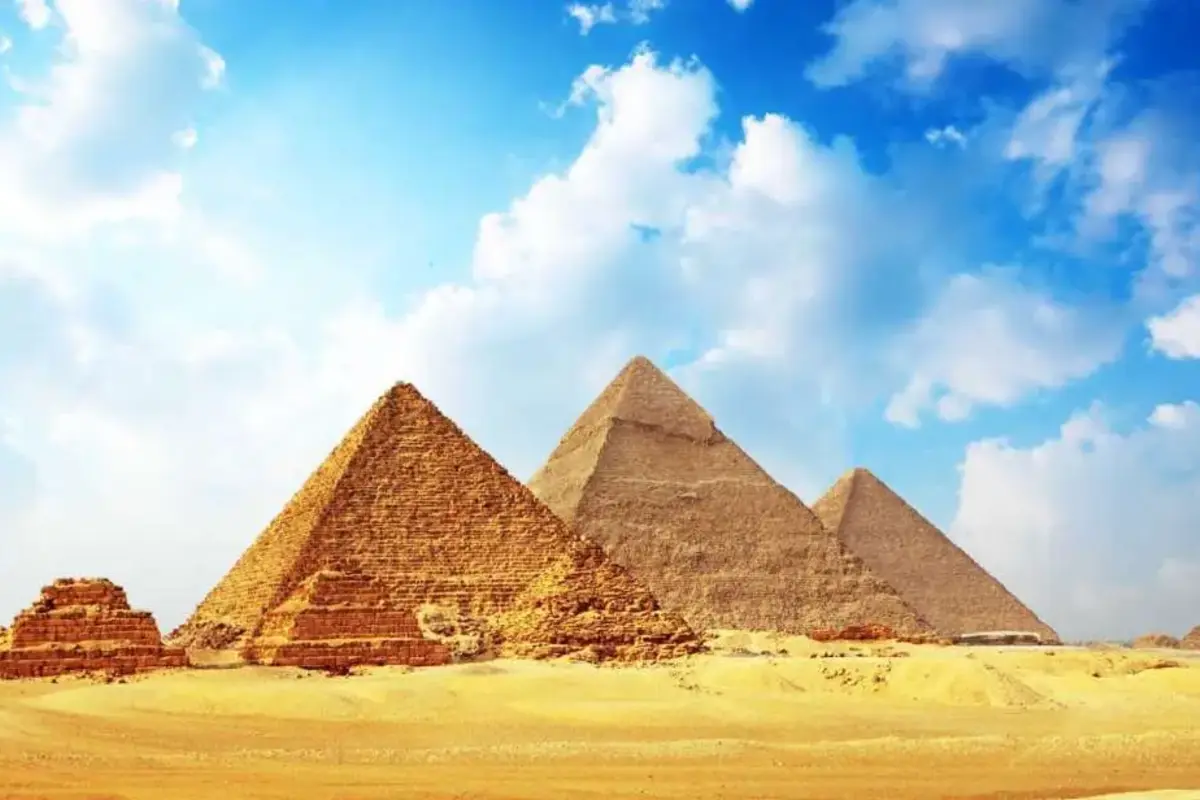
Unlike the towering pyramids of Giza, the Valley of the Kings was designed to conceal royal tombs deep within the mountains, protecting them from grave robbers while ensuring the safe journey of the pharaohs into the afterlife. More than 60 tombs have been discovered here, belonging to some of Egypt's greatest rulers, including Tutankhamun, Seti I, Ramses II, Ramses III, Ramses IV, Ramses VI, Merenptah, and many other members of the royal family.
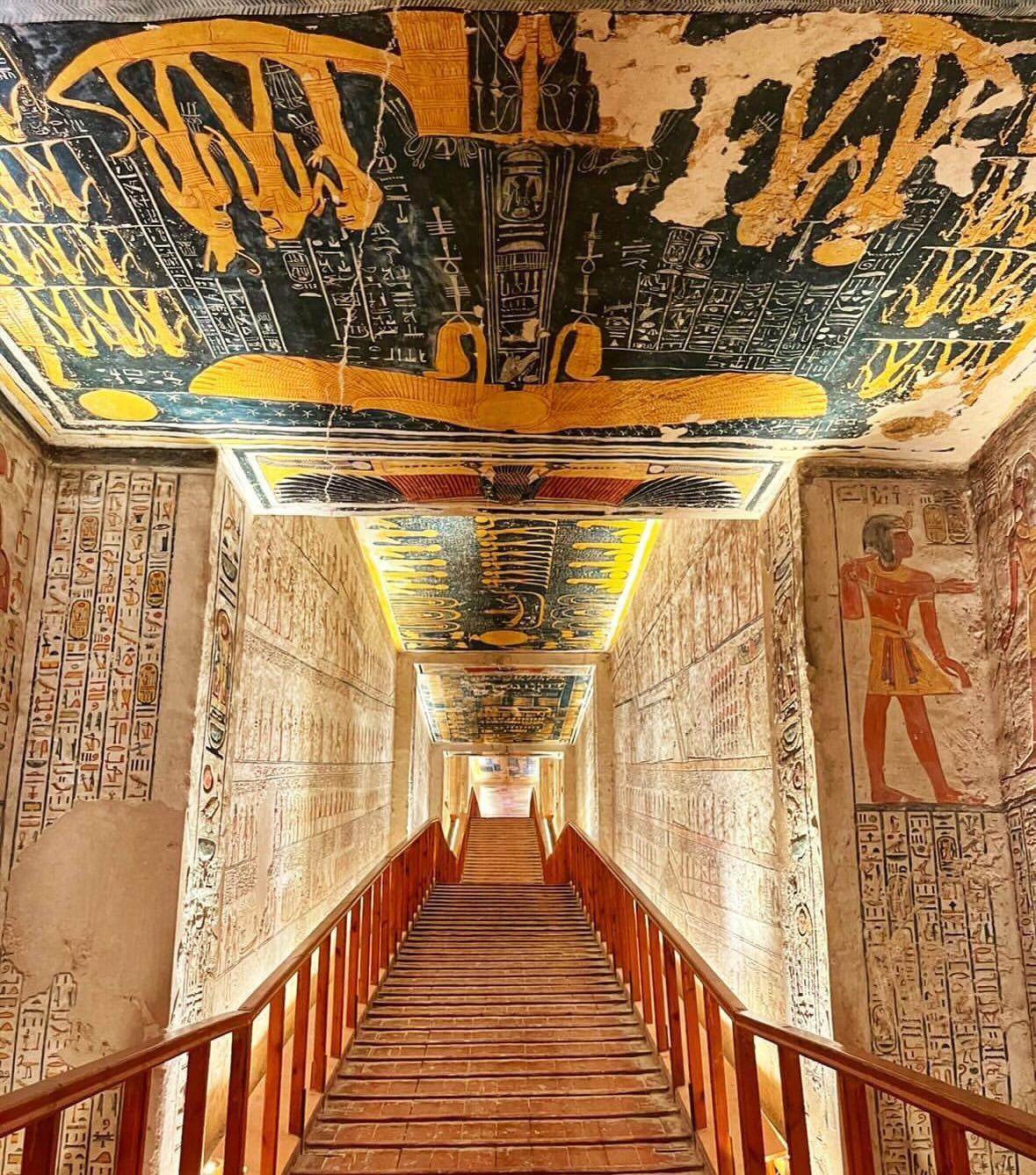
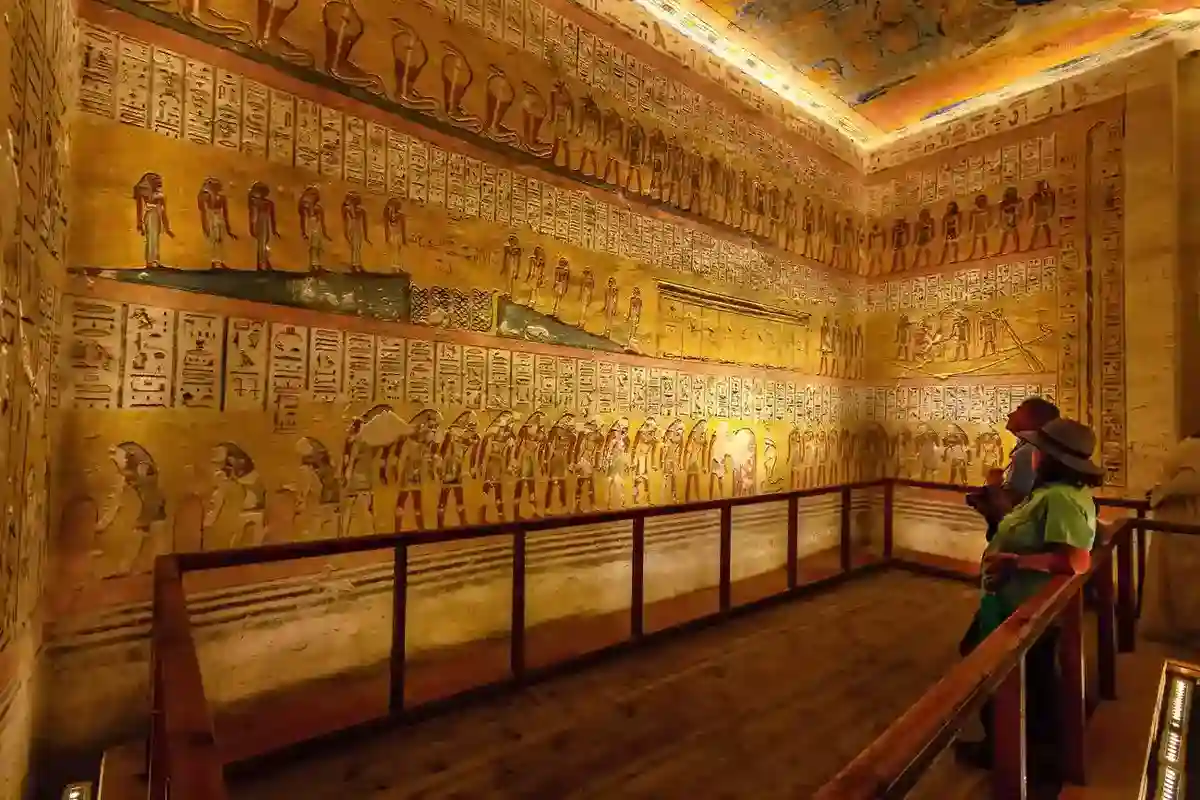
The walls of these underground tombs are decorated with remarkably preserved hieroglyphs, religious texts, colorful paintings, and scenes depicting the pharaoh's journey through the underworld. Together, they provide an unparalleled insight into ancient Egyptian beliefs, royal traditions, and funerary practices.
Recognized as part of the UNESCO World Heritage Site of Ancient Thebes and its Necropolis, the Valley of the Kings is an essential destination for anyone interested in ancient history, archaeology, or Egyptian civilization. Whether you're visiting as part of a Luxor Day Tour, a relaxing Nile Cruise Package, or a comprehensive Egypt Vacation Package, the Valley of the Kings promises an unforgettable journey into the world of the pharaohs.
History of the Valley of the Kings
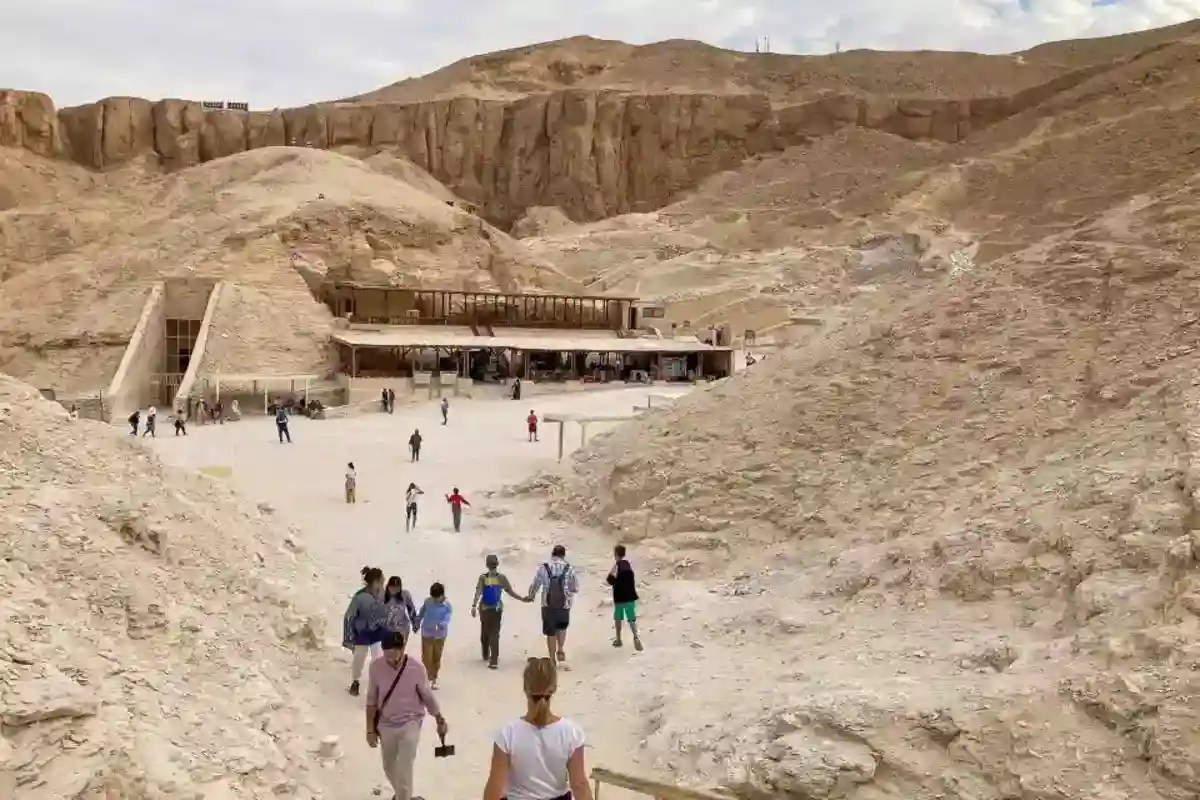
The history of the Valley of the Kings began during the 18th Dynasty, around 1550 BC, when Pharaoh Thutmose I decided to abandon the tradition of constructing pyramids as royal tombs. Instead, he selected a remote desert valley surrounded by towering cliffs on the west bank of the Nile to create a hidden royal necropolis.
This decision was influenced by several important factors. The isolated location offered greater security against tomb robbers, while the pyramid-shaped peak of El-Qurn, which overlooks the valley, symbolically echoed the shape of the ancient pyramids. The western bank of the Nile also held deep religious significance, as the setting sun represented death and rebirth in ancient Egyptian belief.
Over the following five centuries, successive rulers of the 18th, 19th, and 20th Dynasties commissioned elaborate underground tombs carved directly into the limestone mountains. Each tomb became more sophisticated than the last, featuring long corridors, richly decorated burial chambers, hidden passages, and intricate religious artwork intended to guide the king safely into the afterlife.
Unlike the pyramids, these tombs were intentionally concealed beneath the desert floor. Their entrances were carefully hidden, and many were sealed after the pharaoh's burial. Despite these precautions, most tombs were eventually robbed during antiquity. Fortunately, the spectacular wall paintings and inscriptions survived, preserving some of the finest examples of ancient Egyptian art ever discovered.
One exception was the tomb of the young Pharaoh Tutankhamun, whose burial chamber remained largely intact until its discovery in 1922. The incredible treasures found inside transformed our understanding of ancient Egypt and made the Valley of the Kings internationally famous.
Today, the Valley continues to be an active archaeological site. New discoveries, conservation projects, and scientific research regularly reveal more about the lives, beliefs, and burial traditions of Egypt's pharaohs, ensuring that this legendary necropolis remains one of the most important historical sites in the world.
Why Was the Valley of the Kings Chosen?
The Valley of the Kings was carefully selected by the ancient Egyptians as the royal burial ground for the pharaohs of the New Kingdom. Unlike the Old Kingdom rulers, who built monumental pyramids at Giza and Saqqara, later pharaohs sought a more secure and secluded location to protect their tombs and treasures from theft.
Situated on the west bank of the Nile River opposite ancient Thebes (modern Luxor), the valley held profound religious significance. In ancient Egyptian belief, the west was associated with the setting sun, symbolizing death, rebirth, and the journey into the afterlife. This made the location ideal for the eternal resting place of Egypt's kings.
The valley is dominated by the distinctive peak of El-Qurn, a mountain whose natural pyramid-like shape may have inspired its selection. This striking summit overlooks the royal necropolis and symbolically replaced the man-made pyramids of earlier dynasties.
Its isolated desert setting also provided natural protection. Surrounded by steep limestone cliffs with only a few narrow entrances, the valley was easier to guard than the open pyramid fields of northern Egypt.
Today, visitors exploring the Valley of the Kings as part of our Luxor Tours, Egypt Tour Packages, or Nile Cruise Packages can still appreciate why this dramatic landscape was chosen more than 3,500 years ago.
The East Valley and the West Valley
The Valley of the Kings is divided into two main sections: the East Valley and the West Valley.
The East Valley
The East Valley contains the majority of the royal tombs and is the section visited by most tourists. More than 60 tombs have been identified here, including those of:
- Tutankhamun (KV62).
- Seti I (KV17).
- Ramses III (KV11).
- Ramses IV (KV2).
- Ramses VI (KV9).
- Merenptah (KV8).
- Thutmose III (KV34).
These tombs are renowned for their beautifully preserved paintings, elaborate burial chambers, and detailed religious inscriptions describing the king's journey through the afterlife.
The West Valley
The West Valley, sometimes called the Valley of the Monkeys, contains far fewer tombs but remains archaeologically significant.
Its best-known burial is the tomb of Pharaoh Amenhotep III, one of Egypt's greatest rulers. The valley receives fewer visitors, offering a quieter experience for those interested in exploring beyond the main tourist route.
The Most Famous Tombs
Each royal tomb within the Valley of the Kings is unique in design, decoration, and historical importance. While some tombs are relatively modest, others feature long corridors, magnificent burial chambers, colorful wall paintings, and intricate hieroglyphic texts that have survived for thousands of years.
Depending on conservation work and restoration projects, different tombs are open to visitors throughout the year.
Many Luxor Day Tours include admission to three standard tombs, while famous tombs such as Tutankhamun, Seti I, and Ramses V & VI usually require separate tickets.
The Tomb of Tutankhamun (KV62)
Without question, the most famous tomb in the Valley of the Kings is that of Pharaoh Tutankhamun.
Discovered on 4 November 1922 by British archaeologist Howard Carter, the tomb became one of the greatest archaeological discoveries in history.
Unlike most royal tombs, Tutankhamun's burial chamber remained largely untouched by ancient tomb robbers. Inside, Carter discovered more than 5,000 priceless objects, including:
- The world-famous golden funerary mask.
- Gold coffins.
- Jewelry and precious ornaments.
- Chariots.
- Furniture.
- Weapons.
- Statues.
- Religious artifacts.
Today, most of these treasures are displayed at the Grand Egyptian Museum, while Tutankhamun's mummy remains inside the original tomb, allowing visitors to stand in the same chamber where one of history's greatest discoveries was made.
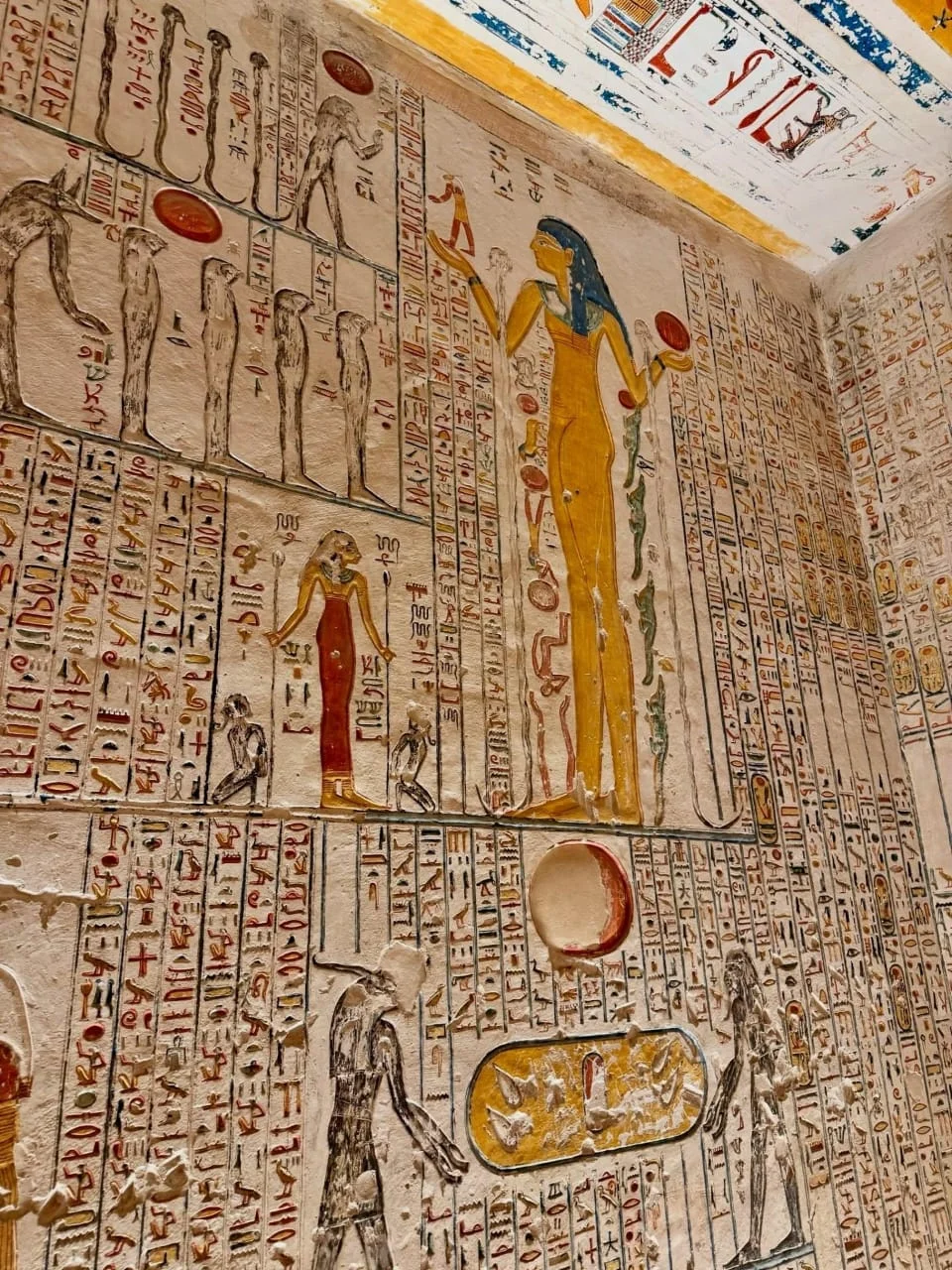
The Tomb of Seti I (KV17)
Often regarded as the most beautiful tomb in the Valley of the Kings, the tomb of Pharaoh Seti I is an extraordinary masterpiece of ancient Egyptian art.
Discovered in 1817 by Italian explorer Giovanni Battista Belzoni, the tomb extends more than 137 meters (450 feet) into the mountain, making it one of the longest royal tombs ever discovered.
Its walls are decorated with exceptionally detailed scenes from sacred funerary texts, including:
- The Book of Gates
- The Book of the Dead
- The Amduat
- The Litany of Ra
The vivid colors and remarkable preservation make this tomb one of the greatest artistic achievements of ancient Egypt. Because of its delicate condition, visitor access is carefully controlled.
The Tomb of Ramses VI (KV9)
The tomb of Ramses VI is among the most spectacular tombs regularly open to visitors.
Its long corridors and soaring ceilings are completely covered with colorful astronomical scenes, religious texts, and beautifully carved hieroglyphs.
One of its most remarkable features is the magnificent ceiling of the burial chamber, decorated with the Book of the Heavens, illustrating the goddess Nut swallowing the sun each evening and giving birth to it again every morning—a powerful symbol of rebirth.
The excellent preservation of its artwork makes KV9 one of the highlights of any visit to the Valley of the Kings.
Architecture of the Royal Tombs
Although every tomb is unique, most follow a similar architectural plan.
Visitors typically pass through:
- A decorated entrance.
- Long descending corridors.
- Pillared halls.
- Side storage chambers.
- Ritual rooms.
- The magnificent burial chamber containing the royal sarcophagus.
The walls are covered with colorful reliefs illustrating the pharaoh's journey through the underworld, encounters with gods and goddesses, and magical spells intended to ensure eternal life.
Unlike earlier pyramid burials, these underground tombs focused on protecting the king's body while surrounding him with sacred texts that guided his soul safely into the afterlife.
Fascinating Facts About the Valley of the Kings
- More than 60 royal tombs have been discovered.
- The valley served as Egypt's royal cemetery for approximately 500 years.
- Tutankhamun's tomb remained largely intact until 1922.
- The Valley forms part of the UNESCO World Heritage Site of Ancient Thebes and its Necropolis.
- Some tomb ceilings contain ancient astronomical maps and constellations.
- Many tomb paintings still retain their original colors after more than 3,000 years.
- Archaeologists continue to make new discoveries and improve conservation techniques throughout the valley.
Planning Your Visit to the Valley of the Kings
A visit to the Valley of the Kings is one of the most memorable experiences in Egypt. Located on Luxor's West Bank, this legendary royal necropolis allows visitors to step inside the beautifully decorated tombs of Egypt's greatest pharaohs. The vibrant wall paintings, intricate hieroglyphs, and fascinating history make the Valley one of the highlights of any Luxor Tour, Nile Cruise Package, or Egypt Tour Package.
Most visitors combine the Valley of the Kings with nearby attractions such as the Temple of Hatshepsut, Colossi of Memnon, Karnak Temple, and Luxor Temple, creating a full day of unforgettable sightseeing.
Howard Carter and the Discovery of Tutankhamun's Tomb
One of the greatest moments in archaeological history occurred on 4 November 1922, when British archaeologist Howard Carter discovered the entrance to the tomb of the young pharaoh Tutankhamun (KV62).
After years of searching in the Valley of the Kings, Carter uncovered a staircase leading to a sealed doorway bearing the royal cartouches of Tutankhamun.
When his financial supporter, Lord Carnarvon, arrived several weeks later, Carter carefully opened a small hole in the sealed entrance. Asked if he could see anything inside, Carter famously replied:
"Yes, wonderful things."
Behind the doorway lay one of the greatest archaeological discoveries ever made. More than 5,000 priceless treasures filled the tomb, including the famous golden funerary mask, gilded shrines, chariots, jewelry, furniture, statues, and magnificent coffins.
Today, most of these treasures are displayed in the Grand Egyptian Museum, while visitors to the Valley of the Kings can still enter Tutankhamun's original burial chamber and see his mummy resting inside the tomb.
Opening Hours
The Valley of the Kings is open every day throughout the year.
Summer (April – September)
6:00 AM – 5:00 PM
Winter (October – March)
6:00 AM – 4:00 PM
Opening hours may change during public holidays or Ramadan.
Ticket Information
Visitors must purchase an entrance ticket to access the Valley of the Kings.
A standard ticket usually includes admission to three selected royal tombs, chosen from those open on the day of your visit.
Some of the valley's most famous tombs require additional tickets, including:
- Tomb of Tutankhamun (KV62)
- Tomb of Seti I (KV17)
- Tomb of Ramses V & VI (KV9)
Ticket prices are updated periodically by the Egyptian authorities, so visitors should confirm the latest rates before traveling.
Many Luxor Day Tours, Private Luxor Tours, and Nile Cruise Packages include transportation and guidance, making the visit more convenient.
Best Time to Visit
The best time to visit the Valley of the Kings is between October and April, when temperatures are cooler.
For the most enjoyable experience:
- Arrive immediately after opening.
- Visit early to avoid large tour groups.
- Wear lightweight clothing.
- Carry plenty of drinking water.
- Allow at least 2–3 hours to explore.
Morning visits provide the most comfortable temperatures and the best lighting for photography around the surrounding mountains.
How to Get There
The Valley of the Kings is located approximately 10 kilometers (6 miles) from Luxor city on the West Bank of the Nile.
Visitors can reach the site by:
- Private guided tour
- Taxi
- Private transfer
- Nile River ferry followed by taxi
- Organized Luxor Tours
- Excursions included in Nile Cruise Packages
Most travelers visit the Valley together with nearby archaeological sites as part of a full-day sightseeing tour.
Photography Tips
The dramatic desert scenery surrounding the Valley of the Kings provides outstanding photography opportunities.
For the best photographs:
- Visit early in the morning.
- Capture panoramic views of the limestone mountains.
- Photograph the entrance to the royal tombs.
- Take wide-angle shots of the surrounding valley.
- Use natural morning light whenever possible.
Photography policies inside the tombs may change, and some tombs have restrictions to help preserve their delicate wall paintings.
Visitor Tips
To make the most of your visit:
- Wear comfortable walking shoes.
- Bring sunscreen, sunglasses, and a hat.
- Carry bottled water.
- Respect all archaeological barriers.
- Avoid touching the painted walls.
- Consider hiring a licensed Egyptologist guide.
- Purchase tickets only from official ticket offices.
- Allow enough time to visit several tombs without rushing.
Because temperatures can become extremely hot during summer, early morning visits are strongly recommended.
Nearby Attractions
Many of Luxor's most famous landmarks are located just minutes from the Valley of the Kings.
One of Egypt's most impressive mortuary temples, famous for its unique terraced architecture beneath the cliffs of Deir el-Bahari.
Colossi of Memnon
These two colossal statues of Pharaoh Amenhotep III have guarded Luxor's West Bank for more than 3,400 years.
Medinet Habu
The magnificent mortuary temple of Ramses III, renowned for its remarkably preserved reliefs and colorful carvings.
Valley of the Queens
The burial place of many royal queens and princes, including the spectacular Tomb of Queen Nefertari.
The largest religious complex ever built, located on Luxor's East Bank.
Luxor Temple
Connected to Karnak by the famous Avenue of Sphinxes, Luxor Temple is one of the most beautiful monuments in Egypt.
Conclusion
The Valley of the Kings is one of the greatest archaeological treasures on Earth, offering a remarkable glimpse into the lives, beliefs, and burial traditions of Egypt's most powerful pharaohs. Hidden beneath the limestone hills of Luxor's West Bank, its magnificent tombs preserve thousands of years of history through vibrant paintings, sacred texts, and extraordinary craftsmanship.
Whether you're exploring the legendary Tomb of Tutankhamun, admiring the stunning artwork in the Tomb of Seti I, or discovering the fascinating stories behind Egypt's royal necropolis, a visit to the Valley of the Kings is an unforgettable experience.
For the ultimate Luxor adventure, combine your visit with Karnak Temple, Luxor Temple, the Temple of Hatshepsut, Medinet Habu, the Colossi of Memnon, and the Valley of the Queens. Our carefully planned Luxor Tours, Private Egypt Tours, Nile Cruise Packages, and Egypt Tour Packages allow you to explore these iconic landmarks with expert Egyptologist guides, ensuring a deeper understanding of one of the world's greatest ancient civilizations.