

Great Sphinx of Giza
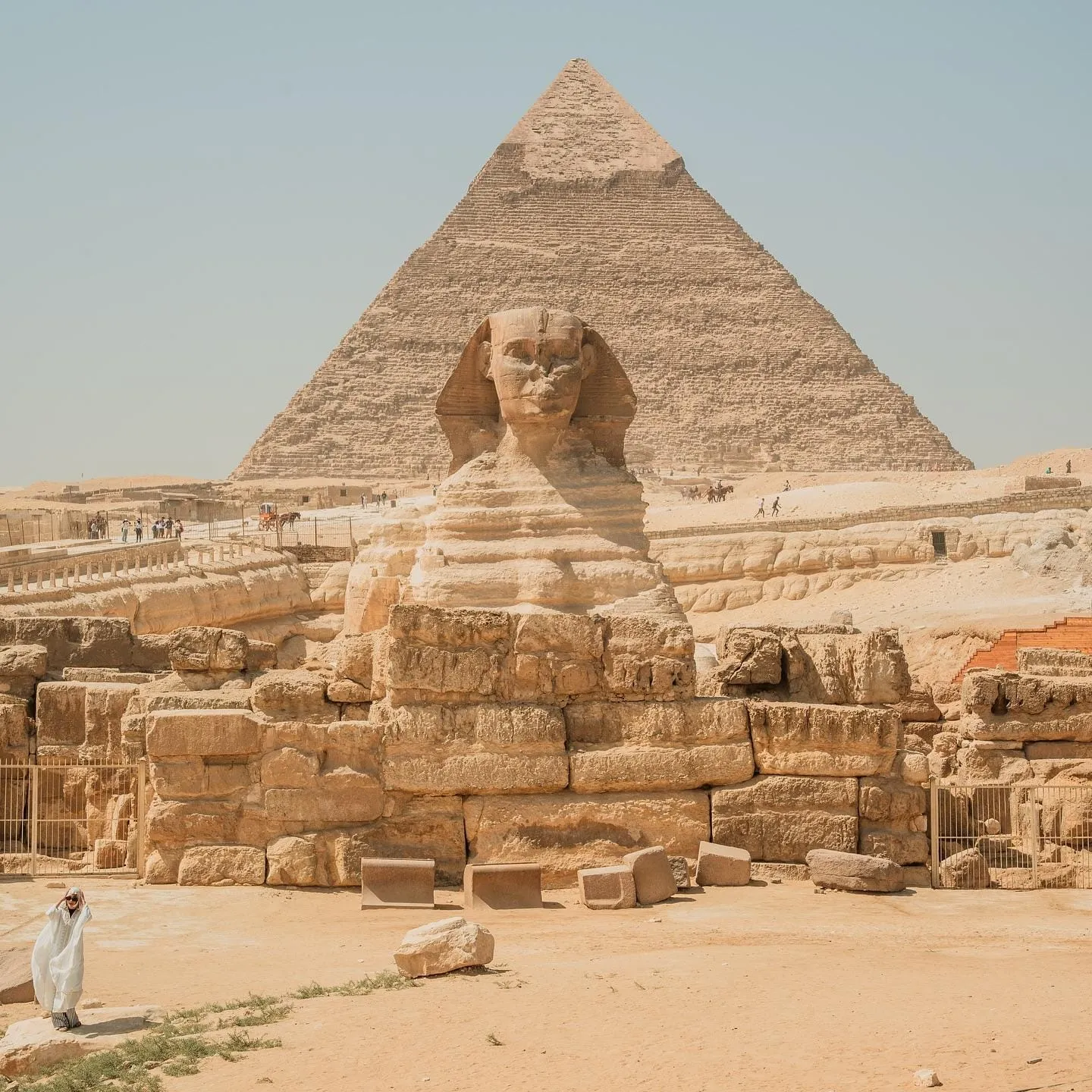
The Great Sphinx of Giza is one of the world's most recognizable monuments and one of the greatest symbols of ancient Egypt. Carved from a single massive limestone outcrop on the Giza Plateau, this magnificent statue combines the body of a lion with the head of a king, representing strength, wisdom, and royal authority. Standing beside the Great Pyramid of Giza for more than 4,500 years, the Sphinx has silently witnessed the rise and fall of civilizations, becoming one of the most mysterious and admired monuments ever created.
Believed to have been built during the reign of Pharaoh Khafre around 2500 BC, the Great Sphinx measures approximately 73 meters (240 feet) in length and 20 meters (66 feet) in height, making it the largest monolithic statue carved from a single piece of stone in the ancient world. Despite centuries of erosion, restoration, and countless legends surrounding its missing nose and hidden chambers, the Sphinx continues to captivate millions of visitors every year.
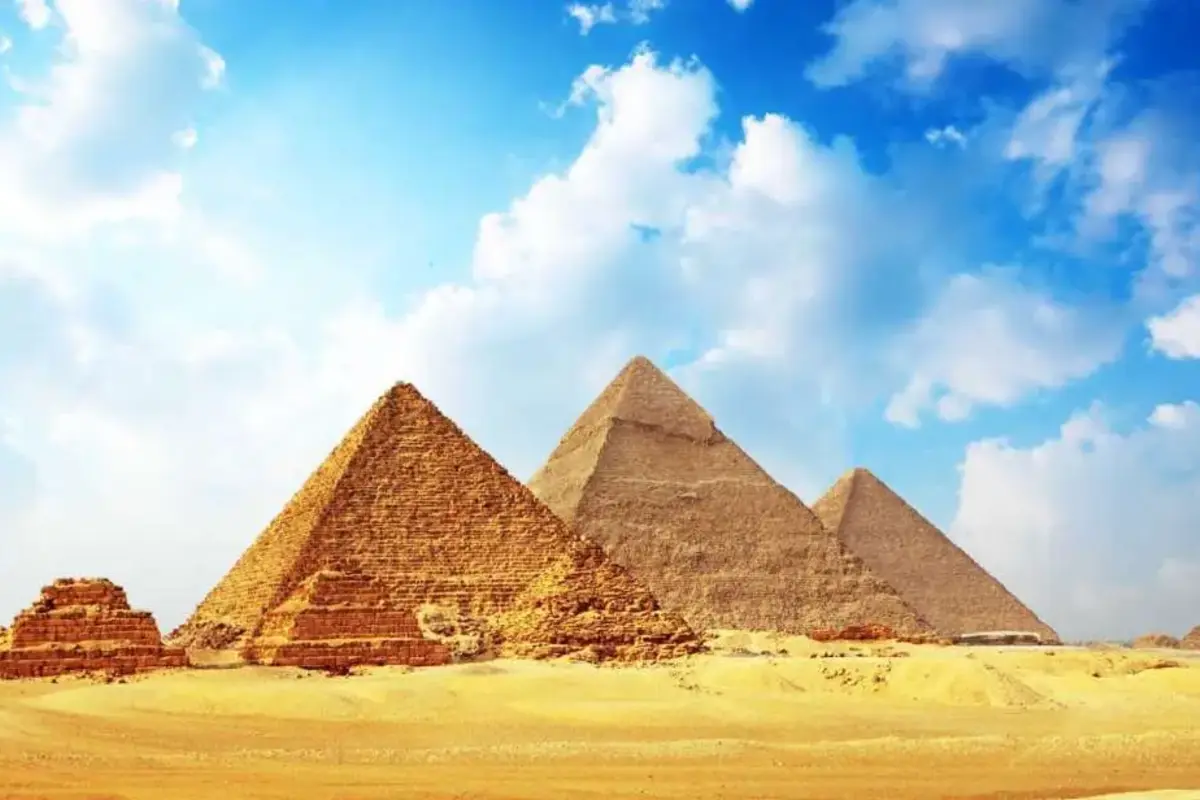
Located within the UNESCO World Heritage-listed Giza Necropolis, the Great Sphinx stands just a short distance from the pyramids of Khufu, Khafre, and Menkaure. Together, these extraordinary monuments form one of the world's most famous archaeological sites and remain among the top attractions in Egypt.
Whether you're fascinated by ancient history, mythology, archaeology, or photography, visiting the Great Sphinx of Giza is an unforgettable experience and an essential part of any journey through Egypt.
History of the Great Sphinx of Giza
The history of the Great Sphinx begins during Egypt's prosperous Fourth Dynasty, a period often called the golden age of pyramid construction. Most Egyptologists believe the monument was carved during the reign of Pharaoh Khafre, the builder of the second pyramid at Giza. Its position directly in front of Khafre's Valley Temple and the similarity between the statue's facial features and surviving royal portraits strongly support this theory.
Rather than being built from separate stone blocks, the Sphinx was carved directly from a natural limestone ridge that remained after quarrying stone for the nearby pyramids. Ancient Egyptian craftsmen carefully shaped the bedrock into the body of a reclining lion while sculpting the king's head wearing the traditional Nemes royal headdress. This remarkable achievement required exceptional planning, artistic skill, and engineering knowledge.
In ancient Egyptian culture, lions symbolized power, courage, and protection. By combining a lion's body with the face of the reigning pharaoh, the Sphinx became a powerful guardian watching over the royal tombs of Giza. Its eastward-facing position allowed it to greet the rising sun each morning, reinforcing its connection with the sun god Ra and the concept of royal rebirth.
Over the centuries, desert sands gradually buried much of the Sphinx, leaving only its head visible for long periods. Several ancient rulers ordered excavations to uncover the monument, including Pharaoh Thutmose IV, who restored the Sphinx after, according to legend, dreaming that the monument promised him the throne if he cleared away the surrounding sand. To commemorate this event, he erected the famous Dream Stela between the Sphinx's front paws, where it remains today.
The Great Sphinx has continued to inspire travelers, scholars, and explorers from ancient Greek historians to modern archaeologists. Despite extensive research, many aspects of its construction, original appearance, and symbolic meaning remain subjects of ongoing study, making it one of the most intriguing monuments of the ancient world.
Architecture and Design of the Great Sphinx of Giza
The Great Sphinx of Giza is one of the finest examples of monumental sculpture from the ancient world. Unlike the nearby pyramids, which were built using millions of carefully cut stone blocks, the Sphinx was carved directly from a single natural limestone outcrop on the Giza Plateau. This remarkable feat demonstrates the exceptional skill and vision of ancient Egyptian craftsmen.
The monument measures approximately 73 meters (240 feet) in length, 19 meters (62 feet) in width, and 20 meters (66 feet) in height, making it the largest monolithic statue from ancient Egypt. Its enormous size continues to amaze visitors, especially when viewed up close.
The body of the Sphinx represents a powerful reclining lion, an animal that symbolized strength, courage, and protection in ancient Egyptian culture. The human head is widely believed to portray Pharaoh Khafre, wearing the traditional Nemes royal headdress, while a sacred cobra (known as the uraeus) once decorated the front of the headdress as a symbol of royal authority. Although the cobra has not survived, traces indicate it was originally part of the sculpture.
Originally, the Great Sphinx was painted in vibrant colors. Scientific analysis has revealed traces of red pigment on the face, blue and yellow on the royal headdress, and other painted details that would have made the monument far more striking than the weathered limestone visitors see today.
The Sphinx faces directly toward the east, greeting the rising sun every morning. This orientation was almost certainly intentional, reflecting the ancient Egyptians' deep connection with the sun god Ra and the pharaoh's divine role in maintaining cosmic order.
Symbolism of the Great Sphinx
The Great Sphinx was much more than a monumental statue; it was a powerful religious and political symbol.
In ancient Egypt, the lion represented strength, courage, and royal protection. By combining the body of a lion with the head of the reigning king, the Sphinx symbolized the pharaoh's power to defend Egypt and maintain harmony throughout the kingdom.
Many Egyptologists believe the Sphinx represented Horemakhet, meaning "Horus of the Horizon." This form of the falcon god Horus was closely associated with the rising sun and the eternal cycle of rebirth. The monument's position facing east reinforced this symbolism, as each sunrise represented renewal and the triumph of light over darkness.
Standing at the entrance to Khafre's funerary complex, the Sphinx also served as the eternal guardian of the royal pyramids, protecting the sacred burial grounds from both physical and spiritual threats.
The Mystery of the Missing Nose
One of the most frequently asked questions about the Great Sphinx concerns its missing nose.
Contrary to a popular myth, Napoleon Bonaparte's soldiers did not destroy the nose during their campaign in Egypt. Historical drawings created before Napoleon arrived already show the Sphinx without its nose.
Most historians believe the nose was deliberately removed sometime during the medieval period. According to historical accounts, a religious figure named Muhammad Sa'im al-Dahr is said to have damaged the monument in the 14th century after objecting to local people making offerings near the Sphinx. While some details remain uncertain, there is no credible evidence linking Napoleon or his army to the damage.
The nose is estimated to have been approximately one meter (over three feet) long. Unfortunately, it has never been recovered.
The Sphinx has also lost its ceremonial beard over time. Fragments of the beard were discovered during archaeological excavations and are now displayed in museums, including the British Museum in London and the Egyptian Museum in Cairo.
Restoration Through the Ages
For much of its history, the Great Sphinx was buried beneath the sands of the Sahara Desert.
Only the head remained visible for centuries, while the rest of the body disappeared beneath drifting sand.
The first known major restoration took place during the reign of Pharaoh Thutmose IV around 1400 BC. According to the famous Dream Stela, the young prince fell asleep beside the buried Sphinx and dreamed that the monument promised him the throne if he cleared away the surrounding sand. After becoming pharaoh, he fulfilled this promise by excavating and restoring the statue.
Throughout the Greek, Roman, and Islamic periods, the Sphinx was repeatedly covered by desert sand before being uncovered once again.
Modern archaeological excavations during the 19th and 20th centuries completely revealed the monument, allowing experts to begin extensive conservation work.
Today, Egyptian archaeologists continue to monitor the condition of the Sphinx, carrying out restoration projects designed to protect it from erosion, pollution, groundwater, and changing environmental conditions. Advanced scientific techniques are now used to preserve this priceless monument for future generations while maintaining its historical authenticity.
Amazing Facts About the Great Sphinx
- The Great Sphinx is the largest monolithic statue in ancient Egypt.
- It has stood on the Giza Plateau for more than 4,500 years.
- The statue was carved directly from a single limestone outcrop rather than assembled from separate blocks.
- It measures approximately 73 meters (240 feet) in length.
- The face is widely believed to represent Pharaoh Khafre.
- It originally featured brightly painted colors that have faded over time.
- The missing nose has inspired centuries of myths and legends.
- The Sphinx faces directly east toward the rising sun.
- It forms part of the UNESCO World Heritage Site of the Giza Necropolis.
- Millions of visitors travel from around the world each year to admire this extraordinary monument.
Planning Your Visit to the Great Sphinx of Giza
A visit to the Great Sphinx of Giza is an essential part of any trip to Egypt. Located within the world-famous Giza Pyramid Complex, the Sphinx stands only a short walk from the Great Pyramid, making it easy to explore both monuments during the same visit. Whether you are interested in ancient history, archaeology, photography, or simply experiencing one of the world's greatest landmarks, the Sphinx offers an unforgettable journey into Egypt's remarkable past.
Its impressive size, mysterious expression, and dramatic setting against the backdrop of the pyramids make it one of the most photographed monuments in the world. Many visitors describe standing before the Sphinx as one of the highlights of their entire journey through Egypt.
Opening Hours
The Great Sphinx is located inside the Giza Pyramid Complex, which is open daily throughout the year.
Summer (April – September)
7:00 AM – 7:00 PM
Winter (October – March)
8:00 AM – 5:00 PM
Opening hours may change during public holidays or Ramadan, so visitors are encouraged to check the latest schedule before arriving.
Ticket Information
Access to the Great Sphinx is included with admission to the Giza Pyramid Complex.
Some special experiences or interior access to nearby monuments may require additional tickets. Ticket prices are updated periodically by the Egyptian authorities, so it is advisable to verify the latest rates before your visit.
Best Time to Visit
The most comfortable time to visit the Great Sphinx is between October and April, when Egypt enjoys cooler temperatures and pleasant weather.
For the best experience:
- Visit early in the morning to avoid crowds.
- Enjoy cooler temperatures during sightseeing.
- Capture beautiful photographs with soft morning light.
- Combine your visit with the Great Pyramid before tour groups become busy.
Late afternoon is also an excellent time for photography, as the golden sunlight creates spectacular views across the Giza Plateau.
How to Get There
The Great Sphinx is located on the Giza Plateau, approximately 15 kilometers (9 miles) southwest of downtown Cairo.
Visitors can reach the site by:
- Private guided tour
- Taxi
- Uber or ride-hailing services
- Private transfer
- Public transportation combined with a short taxi ride
Most visitors choose a private tour that includes transportation, entrance assistance, and an expert Egyptologist guide.
What to Expect During Your Visit
Walking toward the Great Sphinx is an unforgettable experience. As you approach, the monument gradually reveals its immense size and remarkable craftsmanship.
A visit usually includes:
- Walking through the viewing areas surrounding the Sphinx.
- Admiring the Dream Stela between its front paws.
- Learning about its fascinating history.
- Taking panoramic photographs with the pyramids in the background.
- Exploring nearby temples and archaeological remains.
Most visitors spend 30 to 60 minutes at the Sphinx before continuing to other attractions within the Giza Plateau.
Photography Tips
The Great Sphinx is one of Egypt's most photogenic landmarks.
For the best photographs:
- Visit shortly after sunrise.
- Use a wide-angle lens to include both the Sphinx and the Great Pyramid.
- Walk to designated viewpoints for panoramic shots.
- Visit during golden hour before sunset for warm natural lighting.
- Bring a zoom lens to capture detailed views of the Sphinx's face and weathered limestone.
Drone photography is prohibited without official authorization.
Accessibility
The viewing areas around the Great Sphinx are relatively easy to access, although visitors should expect uneven stone pathways and outdoor walking.
Comfortable shoes are recommended, especially if you plan to explore the entire Giza Plateau.
Visitor Tips
To make the most of your visit:
- Wear lightweight clothing during warmer months.
- Bring sunscreen, sunglasses, and a hat.
- Carry bottled water.
- Wear comfortable walking shoes.
- Arrive early to avoid crowds.
- Respect all archaeological barriers.
- Purchase tickets only from official ticket offices.
Consider hiring a licensed Egyptologist guide to gain a deeper understanding of the monument's history and symbolism.
Nearby Attractions
Your visit to the Great Sphinx can easily be combined with several of Egypt's most famous attractions.
Great Pyramid of Giza
The largest and oldest pyramid in Egypt, and the only surviving Wonder of the Ancient World.
Pyramid of Khafre
Often recognized by the remaining casing stones near its summit, this pyramid is believed to have been built by the same pharaoh associated with the Sphinx.
Pyramid of Menkaure
The smallest of the three main pyramids, yet an important part of the Giza Necropolis.
Grand Egyptian Museum
One of the world's largest archaeological museums, showcasing thousands of priceless ancient Egyptian artifacts.
Saqqara
Home to the famous Step Pyramid of Djoser, considered the world's oldest large-scale stone structure.
Memphis
Egypt's ancient capital, featuring remarkable statues, temples, and archaeological treasures.
Conclusion
The Great Sphinx of Giza is one of the most extraordinary monuments ever created by humankind. For more than 4,500 years, this majestic guardian of the Giza Plateau has stood as a symbol of ancient Egypt's power, artistry, and enduring legacy. Its mysterious smile, impressive scale, and remarkable history continue to inspire millions of travelers every year.
Whether you're visiting for its historical significance, legendary mysteries, or breathtaking setting beside the pyramids, the Great Sphinx offers an unforgettable experience. Combine your visit with the Great Pyramid of Giza, the Grand Egyptian Museum, Saqqara, and Memphis to discover the rich heritage of one of the world's oldest civilizations.
If you're planning your journey, explore our Egypt tour packages, Cairo day tours, and private guided experiences to enjoy a well-organized visit led by professional Egyptologist guides. The Great Sphinx of Giza is more than just an ancient monument—it's a timeless icon that belongs on every traveler's Egypt itinerary.