

Abydos Temple | Discover Egypt's Sacred Temple of Seti I
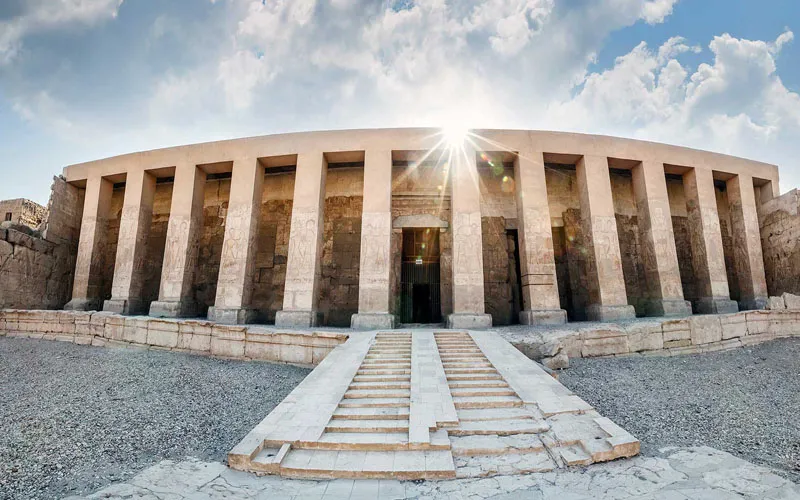
Located about 160 km (99 miles) north of Luxor in Sohag Governorate, Abydos Temple is one of the most sacred and historically significant archaeological sites in Egypt. Known as the Temple of Seti I, this remarkable monument was dedicated to Osiris, the ancient Egyptian god of the underworld, resurrection, and eternal life. For thousands of years, Abydos was regarded as one of the holiest pilgrimage destinations in ancient Egypt, attracting worshippers who believed that a visit to this sacred city brought them closer to Osiris and the promise of the afterlife.
Commissioned by Pharaoh Seti I during the 19th Dynasty and completed by his son Ramses II, the temple is celebrated for its exceptionally well-preserved reliefs, elegant architecture, and the world-famous Abydos King List—one of the most important historical records of ancient Egyptian rulers. The intricate carvings found throughout the temple are considered among the finest examples of New Kingdom art, rivaling those at Karnak Temple, Luxor Temple, and the Temple of Hatshepsut.
Abydos was more than a temple complex; it was a major religious center where elaborate festivals honored Osiris. Pilgrims traveled from every corner of Egypt to participate in sacred ceremonies, making Abydos a spiritual destination comparable to Philae Temple, Edfu Temple, and Dendera Temple.
Today, Abydos Temple is one of the most rewarding day trips from Luxor. Many travelers combine it with Dendera Temple on a full-day excursion, while others include it in longer Egypt Tour Packages, Historical Egypt Tours, or Private Egypt Tours. Whether you are passionate about archaeology, mythology, or ancient history, Abydos Temple offers an unforgettable glimpse into the religious heart of ancient Egypt.
History of Abydos Temple
The history of Abydos Temple dates back more than 5,000 years, making Abydos one of the oldest and most sacred religious centers in ancient Egypt. Long before the construction of the magnificent Temple of Seti I, Abydos served as an important royal cemetery during Egypt's Early Dynastic Period, where some of the country's first kings were buried. Over time, the city became closely associated with Osiris, the god of the underworld, resurrection, and eternal life, transforming Abydos into the most important pilgrimage destination in ancient Egypt.
The temple visitors see today was commissioned by Pharaoh Seti I (1290–1279 BC) during the 19th Dynasty of the New Kingdom. Seti I envisioned a magnificent temple that would honor Osiris and preserve the memory of Egypt's greatest rulers. Following his death, the construction was completed by his son, Ramses II, one of Egypt's most famous pharaohs and the builder of the monumental Abu Simbel Temples.
Unlike many temples dedicated to a single deity, Abydos Temple contains seven sanctuaries devoted to Osiris, Isis, Horus, Amun-Ra, Ra-Horakhty, Ptah, and the deified Seti I himself. This unique design highlights Abydos' exceptional religious importance and distinguishes it from other sacred sites such as Karnak Temple, Luxor Temple, Edfu Temple, and Philae Temple.
One of the temple's greatest treasures is the famous Abydos King List, an extraordinary chronological list of 76 Egyptian pharaohs carved into one of the temple walls. Often called the "Rosetta Stone of Egyptian Royal History," the King List has helped archaeologists reconstruct the chronology of ancient Egypt and remains one of the most valuable historical records ever discovered. Visitors interested in Egypt's royal history often continue their journey to the Grand Egyptian Museum (GEM) and the National Museum of Egyptian Civilization (NMEC), where many artifacts from the New Kingdom are displayed.
Every year, thousands of pilgrims traveled to Abydos to participate in the Mysteries of Osiris, one of the most important religious festivals in ancient Egypt. During this celebration, priests reenacted the death, burial, and resurrection of Osiris through elaborate ceremonies, processions, and sacred rituals. The festival symbolized rebirth and eternal life, beliefs that also influenced the royal tombs in the Valley of the Kings and the funerary temples of Luxor's West Bank, including the Temple of Hatshepsut and Medinet Habu Temple.
Today, Abydos Temple remains one of Egypt's finest examples of New Kingdom architecture. Its beautifully preserved reliefs, vibrant inscriptions, and profound spiritual significance make it a highlight of many Luxor Day Tours, Historical Egypt Tours, and Private Egypt Tours. Many travelers combine Abydos with Dendera Temple, creating one of the most rewarding cultural excursions in Upper Egypt.
Architecture of Abydos Temple
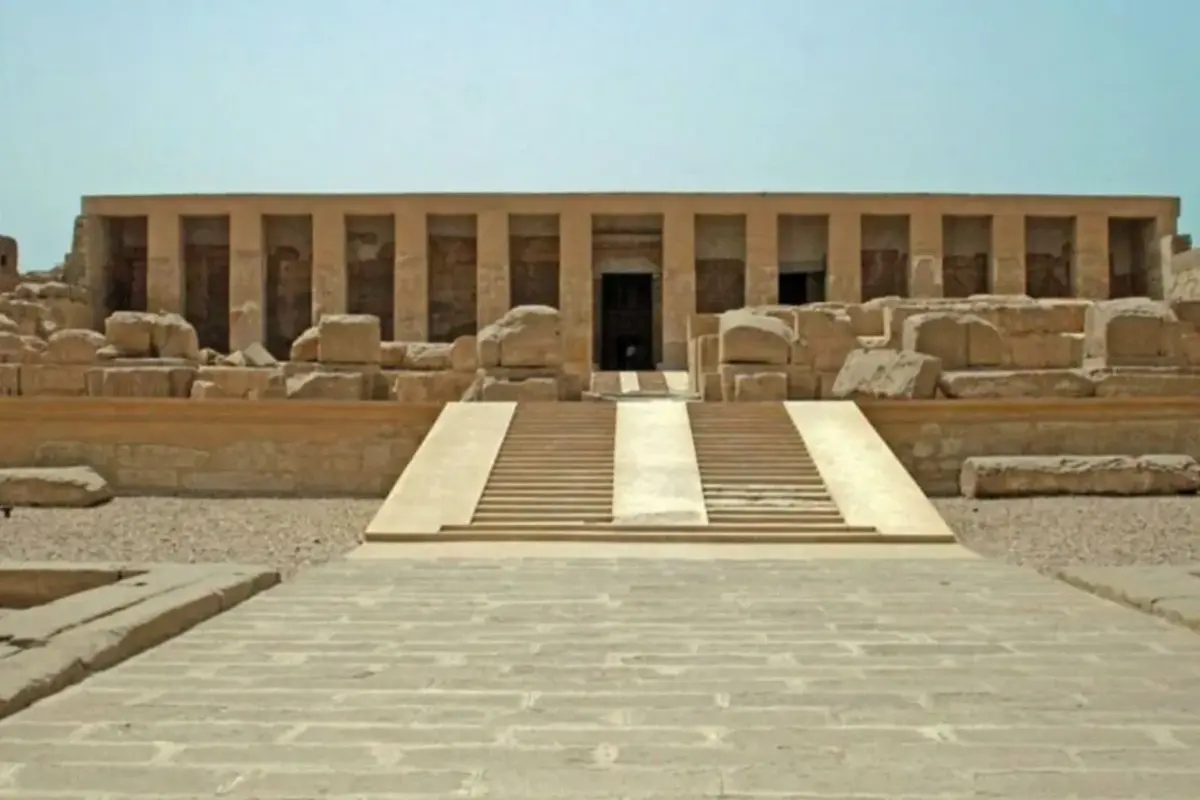
The Temple of Seti I at Abydos is widely regarded as one of the most beautiful temples ever built in ancient Egypt. Unlike many temples that were expanded over centuries, Abydos follows a carefully planned layout that reflects the artistic perfection achieved during the New Kingdom.
Constructed from fine limestone, the temple is renowned for its exceptionally detailed reliefs, many of which still retain traces of their original colors. Egyptologists consider these carvings among the finest in Egypt, rivaling the masterpieces found at Karnak Temple, Luxor Temple, and the Temple of Hatshepsut.
The temple features a series of magnificent halls supported by elegantly carved columns, leading visitors through increasingly sacred spaces toward the seven sanctuaries. Every wall is covered with scenes of Seti I making offerings to the gods, participating in religious ceremonies, and receiving divine blessings that affirmed his role as the rightful ruler of Egypt.
One of the most remarkable architectural features is the Abydos King List, located in a corridor within the temple. This unique monument records the names of Egypt's legitimate pharaohs from Narmer to Seti I, making it an indispensable resource for historians studying ancient Egyptian chronology.
Behind the main temple lies the mysterious Osireion, a symbolic underground monument believed to represent the tomb of Osiris. Built from massive granite blocks surrounded by a water-filled channel, the Osireion differs dramatically from the main temple and remains one of Egypt's most intriguing archaeological mysteries. Visitors fascinated by sacred architecture often compare it with the underground chambers of Dendera Temple and the hidden crypts found in other ancient Egyptian temples.
The harmonious proportions, elegant decoration, and exceptional preservation of Abydos Temple make it one of the greatest masterpieces of Egyptian architecture. For travelers exploring Egypt Tour Packages, Historical Egypt Tours, or Private Egypt Tours, Abydos offers a deeper understanding of the religious beliefs and artistic achievements that shaped ancient Egyptian civilization.
Top Things to See at Abydos Temple
Abydos Temple is filled with remarkable monuments, sacred chambers, and beautifully preserved reliefs that make it one of the most rewarding archaeological sites in Egypt. Whether you're visiting on a Luxor Day Tour, a Private Egypt Tour, or as part of a longer Egypt Tour Package, these are the highlights you shouldn't miss.
The Temple of Seti I
The magnificent Temple of Seti I is the centerpiece of Abydos and one of the finest surviving temples of the New Kingdom.
Its beautifully carved walls depict Pharaoh Seti I presenting offerings to the gods with an extraordinary level of detail rarely seen elsewhere in Egypt. Many Egyptologists consider these reliefs even more refined than those found at Karnak Temple, Luxor Temple, and Medinet Habu Temple.
The Abydos King List
One of the temple's greatest treasures is the famous Abydos King List.
This remarkable inscription records the names of 76 Egyptian pharaohs, beginning with Narmer, who unified Upper and Lower Egypt, and ending with Seti I. The King List has played a crucial role in helping archaeologists reconstruct the chronology of ancient Egyptian history.
Visitors interested in Egypt's royal dynasties often continue their journey to the Grand Egyptian Museum (GEM) and the National Museum of Egyptian Civilization (NMEC), where many artifacts from these rulers are displayed.
The Seven Sacred Sanctuaries
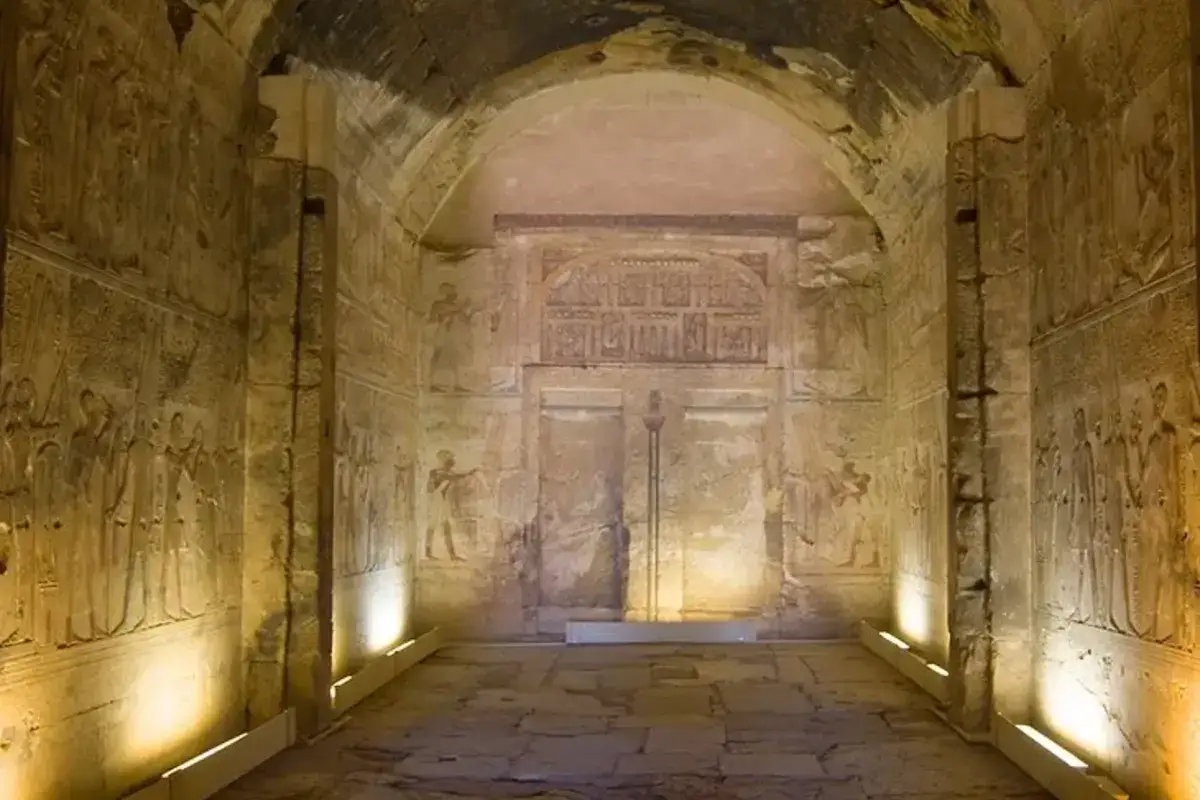
Unlike most Egyptian temples, Abydos contains seven beautifully decorated sanctuaries dedicated to different deities.
These sanctuaries honor:
- Osiris.
- Isis.
- Horus.
- Amun-Ra.
- Ra-Horakhty.
- Ptah.
- Pharaoh Seti I
Their unique layout reflects the exceptional religious importance of Abydos and distinguishes it from temples such as Edfu Temple, Kom Ombo Temple, and Philae Temple.
The Osireion
Behind the main temple lies the mysterious Osireion, one of Egypt's most fascinating ancient structures.
Built from enormous granite blocks and surrounded by a water-filled chamber, the Osireion is believed to symbolize the mythical tomb of Osiris, the god of the underworld and resurrection. Its massive architecture differs significantly from the main temple and continues to intrigue archaeologists and historians.
The Beautiful Reliefs and Hieroglyphs
Every corridor and hall of Abydos Temple is covered with exquisitely carved reliefs that remain among the finest examples of ancient Egyptian art.
These scenes depict religious rituals, offerings to the gods, royal ceremonies, and sacred festivals. The exceptional preservation of the carvings allows visitors to admire details that have survived for more than three thousand years.
The Great Hypostyle Hall
The Hypostyle Hall welcomes visitors with impressive columns decorated with detailed hieroglyphic inscriptions and scenes honoring the gods.
Although smaller than the famous hall at Karnak Temple, it offers a more intimate atmosphere where visitors can closely examine the outstanding craftsmanship of ancient Egyptian artisans.
The Chapel of Osiris
One of the most spiritually significant areas of the temple is the Chapel of Osiris.
Ancient pilgrims believed that praying here brought them closer to eternal life and the blessings of Osiris. This sacred space reflects the deep religious importance of Abydos and explains why it became one of the holiest pilgrimage destinations in ancient Egypt.
The Ancient Pilgrimage Route
Archaeological discoveries around Abydos have revealed the remains of ancient processional routes once used during the Mysteries of Osiris Festival.
During this annual celebration, thousands of pilgrims traveled to Abydos to witness ceremonies reenacting the death and resurrection of Osiris. These traditions influenced religious practices throughout Egypt, including at Dendera Temple, Philae Temple, and other important sacred sites.
Why Visit Abydos Temple?
Abydos Temple offers a completely different experience from many of Egypt's more famous monuments. While sites such as the Great Pyramid of Giza, Karnak Temple, and Luxor Temple impress visitors with their monumental scale, Abydos captivates with its spiritual atmosphere, exceptionally preserved reliefs, and profound historical significance.
The temple is an essential destination for travelers interested in ancient Egyptian religion, mythology, and royal history. Its connection to Osiris, the famous Abydos King List, and the mysterious Osireion make it one of the most fascinating archaeological sites in Egypt.
Many visitors combine Abydos Temple with Dendera Temple during a full-day excursion from Luxor, while others include it in Historical Egypt Tours, Private Egypt Tours, or comprehensive Egypt Tour Packages. Together with nearby attractions such as the Valley of the Kings, Temple of Hatshepsut, Medinet Habu Temple, and the Colossi of Memnon, Abydos helps tell the complete story of ancient Egyptian civilization.
Visitor Information
Planning your visit to Abydos Temple is simple, especially if you're staying in Luxor. Although the temple is located farther north than most of Luxor's famous attractions, it is well worth the journey and is often combined with Dendera Temple on a full-day excursion. Many travelers include Abydos in Luxor Day Tours, Private Egypt Tours, and Historical Egypt Tours to explore one of the most sacred places in ancient Egypt.
Location
Abydos Temple is located in El-Balyana, Sohag Governorate, approximately 160 km (99 miles) north of Luxor and around 90 km (56 miles) south of Dendera Temple.
Its location makes it one of the most popular archaeological day trips from Luxor. Visitors often combine Abydos with Dendera Temple, while longer itineraries also include Karnak Temple, Luxor Temple, the Valley of the Kings, Temple of Hatshepsut, Medinet Habu Temple, and the Colossi of Memnon.
Opening Hours
Abydos Temple is generally open every day.
Opening Hours
Daily: 6:00 AM – 5:00 PM
Opening times may change during public holidays or special events, so it's always recommended to confirm the latest schedule before your visit.
Tickets
Entrance fees are determined by the Egyptian Ministry of Tourism and Antiquities and are subject to change.
Ticket categories generally include:
- International adults.
- International students (with a valid student ID).
- Egyptian citizens and residents.
Many Luxor Day Tours and Egypt Tour Packages include entrance tickets, transportation, and the services of a licensed Egyptologist guide.
Best Time to Visit
The best time to visit Abydos Temple is between October and April, when temperatures are pleasant for sightseeing.
For the best experience:
- Start your journey early in the morning.
- Visit Dendera Temple and Abydos Temple on the same day to maximize your time.
- Enjoy photography during the early morning or late afternoon when the light enhances the temple's beautiful limestone reliefs.
Travelers exploring Luxury Egypt Tours or Private Egypt Tours often dedicate an entire day to discovering these remarkable temples.
How Long Should You Spend at Abydos Temple?
Most visitors spend 2 to 3 hours exploring the temple complex.
If you're interested in archaeology, mythology, or ancient Egyptian history, allow additional time to study the Abydos King List, the Osireion, and the beautifully preserved reliefs that make this temple one of Egypt's greatest artistic masterpieces.
How to Get to Abydos Temple
Visitors can reach Abydos Temple by:
- Private car from Luxor.
- Guided Luxor Day Tours.
- Private Egypt Tours.
- Multi-day Egypt Tour Packages
Although Abydos is not located on the standard Nile Cruise Packages route, many cruise travelers visit before or after their cruise while staying in Luxor. Combining Abydos Temple with Dendera Temple is one of the most popular excursions in Upper Egypt.
Travel Tips for Visiting Abydos Temple
To enjoy the best possible experience:
- Wear comfortable walking shoes suitable for uneven stone surfaces.
- Bring sunscreen, sunglasses, and a hat, especially during the warmer months.
- Carry drinking water, as services near the temple are limited.
- Hire a licensed Egyptologist guide to fully appreciate the temple's history, mythology, and the significance of the Abydos King List.
- Don't miss the mysterious Osireion, one of the most unique structures in ancient Egypt.
- Combine your visit with Dendera Temple to explore two of Egypt's finest and best-preserved religious monuments.
- Continue your journey through Upper Egypt by visiting Karnak Temple, Luxor Temple, Valley of the Kings, Temple of Hatshepsut, Medinet Habu Temple, and the Colossi of Memnon, all featured in many of our Egypt Tour Packages and Historical Egypt Tours.
Conclusion
Abydos Temple stands among the most sacred and historically significant monuments in Egypt. Its breathtaking reliefs, the famous Abydos King List, the mysterious Osireion, and its deep connection to the worship of Osiris make it an unforgettable destination for anyone interested in ancient Egyptian civilization.
Whether you're traveling on a Luxor Day Tour, exploring Upper Egypt through one of our Historical Egypt Tours, or enjoying a customized Private Egypt Tour, Abydos offers an experience unlike any other. To complete your journey through Egypt's religious heritage, combine your visit with Dendera Temple, Karnak Temple, Luxor Temple, the Valley of the Kings, Temple of Hatshepsut, Medinet Habu Temple, and the Colossi of Memnon. Together, these extraordinary sites reveal the timeless legacy of one of the world's greatest civilizations.