

Edfu Temple: The Complete Visitor Guide to the Temple of Horus
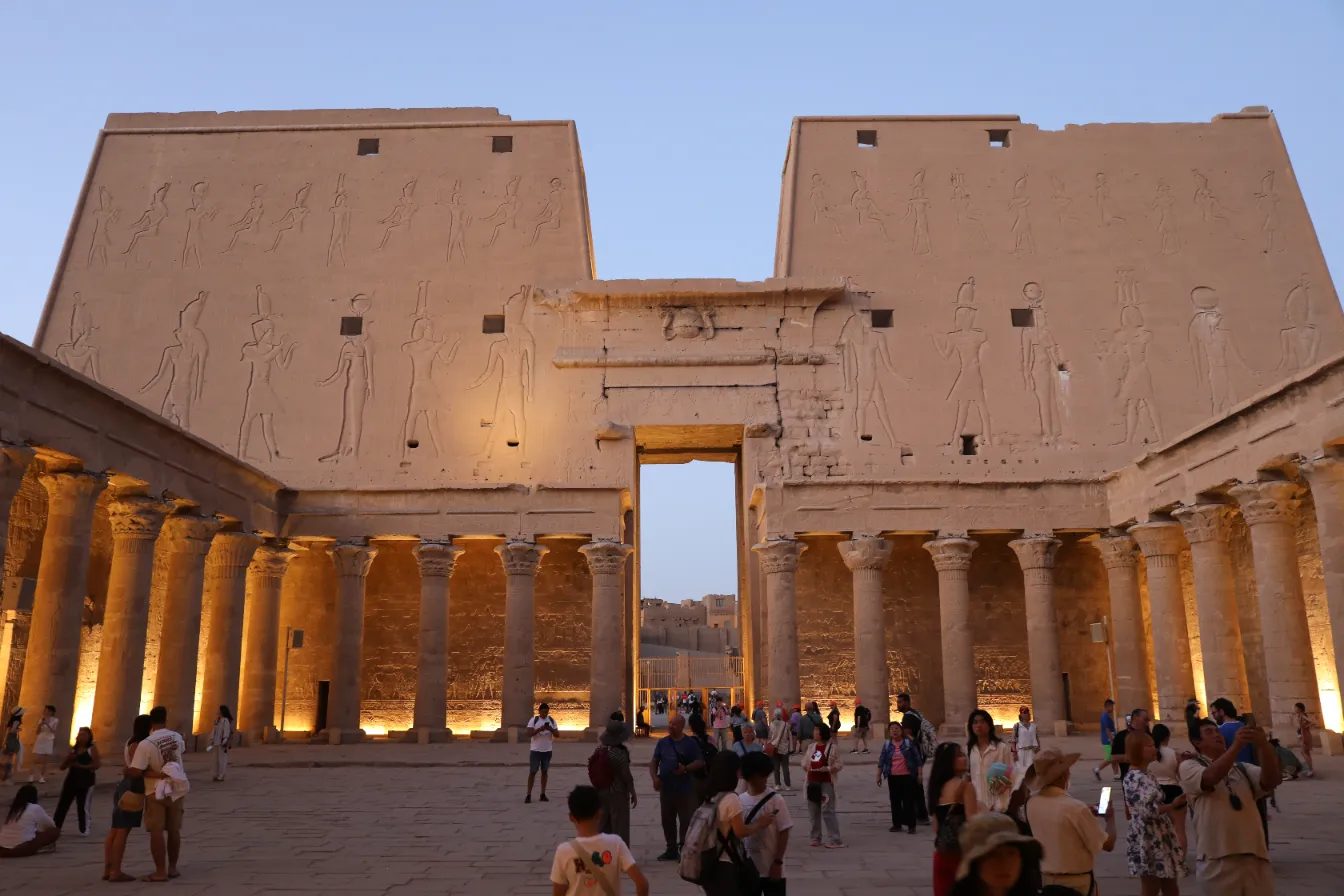
Located on the west bank of the Nile River between Luxor and Aswan, Edfu Temple is one of the most impressive and best-preserved temples in Egypt. Dedicated to Horus, the falcon-headed god of kingship, protection, and victory, the temple provides visitors with an extraordinary opportunity to experience ancient Egyptian architecture almost exactly as it appeared more than 2,000 years ago.
Constructed during the Ptolemaic Period, Edfu Temple is renowned for its massive sandstone walls, towering entrance pylon, beautifully decorated halls, and detailed hieroglyphic inscriptions. Because much of the temple remained buried beneath sand for centuries, it escaped much of the damage suffered by other ancient monuments, preserving its magnificent carvings and architectural features in exceptional condition.
The temple was built on the site where, according to Egyptian mythology, Horus defeated Seth, avenging the death of his father Osiris and restoring order to Egypt. This legendary battle made Edfu one of the most sacred religious centers in ancient Egypt and an important destination for pilgrims.
Today, Edfu Temple is one of the highlights of every Nile Cruise between Luxor and Aswan , Egypt Tour Packages and Egypt Day Tours. Visitors can explore its grand courtyards, impressive hypostyle halls, sacred sanctuary, and fascinating reliefs while discovering the rich mythology and religious traditions that shaped ancient Egyptian civilization.
Whether you are passionate about history, architecture, or mythology, Edfu Temple is an essential destination that offers one of the most complete temple experiences in Egypt.
History of Edfu Temple
Edfu Temple was constructed during the Ptolemaic Dynasty, a period when Egypt was ruled by the descendants of Alexander the Great. Construction began in 237 BC under Ptolemy III Euergetes I and continued for nearly 180 years, with the temple finally completed during the reign of Ptolemy XII Auletes around 57 BC.
Although the rulers of the Ptolemaic Kingdom were of Greek origin, they embraced many ancient Egyptian religious traditions. By building magnificent temples such as Edfu, they strengthened their legitimacy as pharaohs while preserving Egypt's rich spiritual heritage.
The temple was dedicated to Horus, one of the most important gods in ancient Egyptian religion. According to mythology, Edfu was the site where Horus fought and defeated his uncle Seth, who had murdered Horus's father, Osiris. This legendary victory symbolized the triumph of order over chaos and became one of the defining stories of Egyptian mythology.
Throughout the Ptolemaic and Roman periods, Edfu Temple served as a major religious center where priests conducted daily rituals, festivals, and processions honoring Horus. The temple also played an important role in the annual Festival of the Beautiful Reunion, during which the goddess Hathor traveled from Dendera Temple to visit Horus in Edfu, celebrating their sacred union.
Following the spread of Christianity in Egypt, pagan worship gradually declined, and the temple was eventually abandoned. Over the centuries, sand covered much of the structure, protecting its walls, columns, and inscriptions from weathering and human activity.
In the 19th century, French Egyptologist Auguste Mariette led excavations that uncovered the buried temple, revealing one of the finest preserved monuments in Egypt. Today, Edfu Temple stands as an extraordinary testament to the architectural skill, religious devotion, and artistic achievements of the ancient Egyptians.
Architecture of Edfu Temple
Edfu Temple is widely regarded as the best-preserved ancient temple in Egypt and one of the finest examples of Ptolemaic architecture. Built almost entirely from sandstone, the temple follows the traditional layout of an ancient Egyptian temple while showcasing the exceptional craftsmanship of the Ptolemaic period.
The temple extends approximately 137 meters (449 feet) in length and 79 meters (259 feet) in width, making it one of the largest temples in Egypt. Every section was carefully designed to guide worshippers from the public entrance into the increasingly sacred inner chambers dedicated to Horus.
The complex is enclosed by massive sandstone walls decorated with detailed hieroglyphic inscriptions, religious texts, and scenes depicting offerings to the gods. These inscriptions provide valuable information about ancient Egyptian religion, festivals, architecture, and temple rituals.
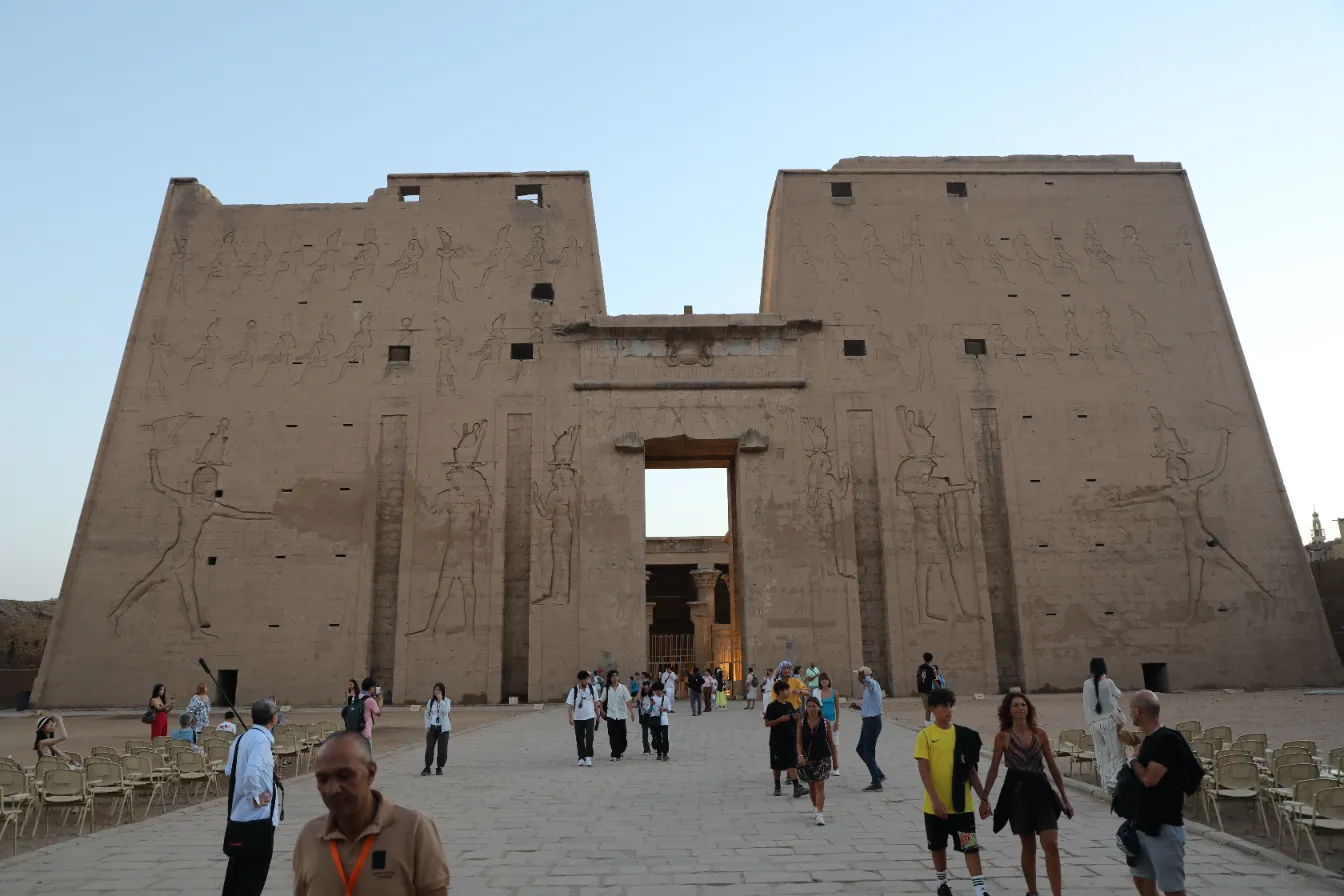
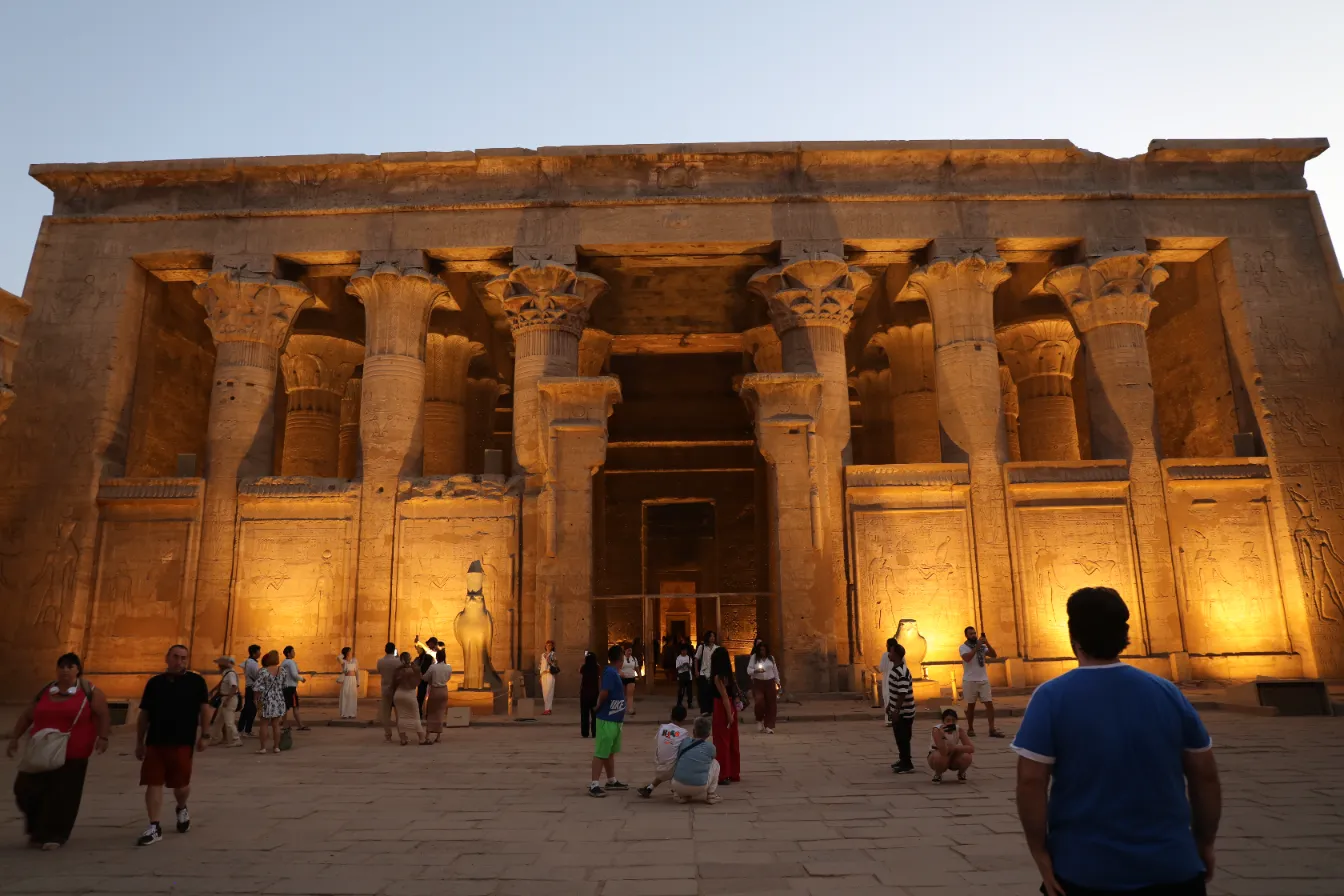
One of the temple's most impressive features is its monumental entrance pylon, which rises approximately 36 meters (118 feet) high. This magnificent gateway is the tallest surviving temple pylon in Egypt and is decorated with dramatic scenes of the pharaoh defeating Egypt's enemies before the falcon god Horus.
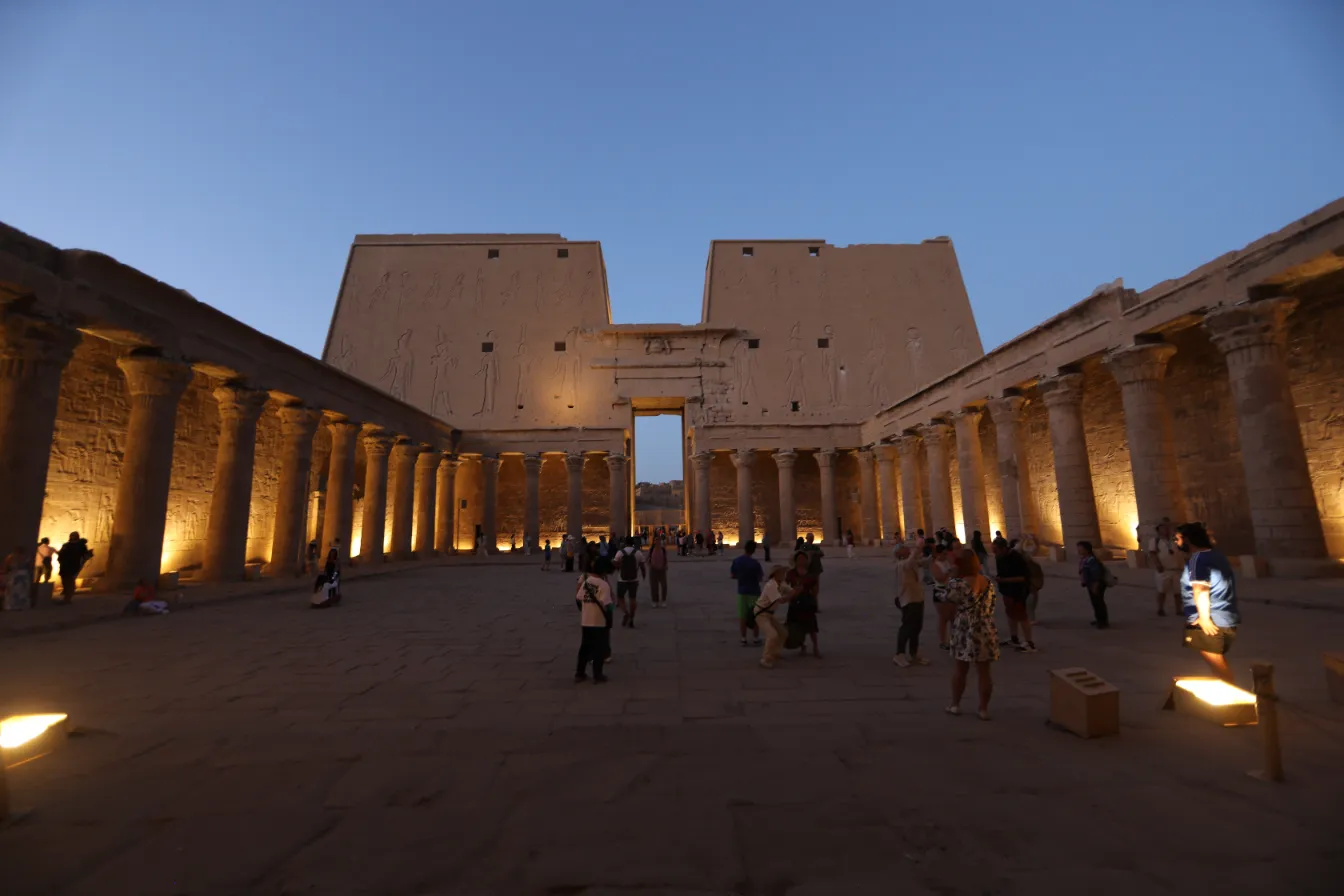
Beyond the entrance lies a spacious open courtyard surrounded by elegant columns with beautifully carved floral capitals. Visitors then pass into the magnificent Hypostyle Hall, where towering columns support massive stone ceilings covered with astronomical and religious inscriptions.
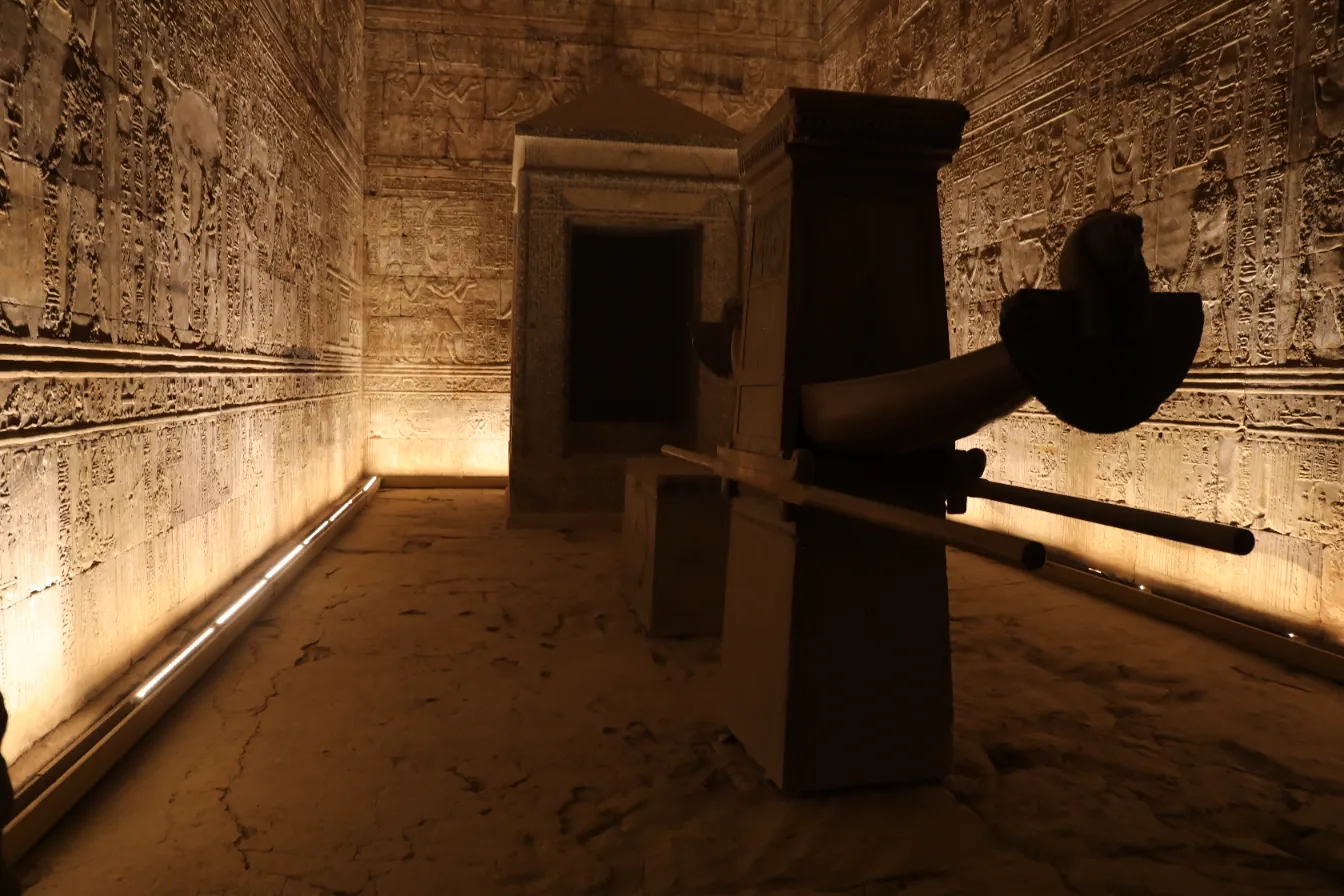
At the heart of the temple is the Sanctuary of Horus, the holiest part of the complex. Here, priests once performed daily ceremonies before the sacred statue of Horus. The sanctuary also contains an impressive granite shrine that originally housed the god's sacred barque.
The exceptional preservation of Edfu Temple allows visitors to experience an ancient Egyptian temple almost exactly as worshippers would have seen it more than 2,000 years ago.
Top Things to See at Edfu Temple
Edfu Temple is filled with magnificent monuments and beautifully preserved architectural features. Every section offers a fascinating insight into the religious beliefs and artistic achievements of ancient Egypt.
The Great Pylon
The massive entrance pylon is the largest surviving temple gateway in Egypt.
Its towering walls are decorated with impressive reliefs showing the pharaoh presenting offerings to Horus and defeating his enemies, symbolizing the victory of order over chaos. These carvings are among the finest examples of Ptolemaic temple art.
The Courtyard of Offerings
After entering the temple, visitors arrive at a large open courtyard surrounded by thirty-two elegant columns.
In ancient times, pilgrims gathered here during religious festivals before entering the temple's more sacred areas. Today, the courtyard offers one of the best panoramic views of the temple's impressive architecture.
The Hypostyle Hall
The Hypostyle Hall is one of the highlights of Edfu Temple.
Its towering columns are richly decorated with hieroglyphics, scenes of religious ceremonies, and images of Horus and other Egyptian deities. The beautifully preserved ceiling creates a dramatic atmosphere, transporting visitors back to the Ptolemaic period.
The Sanctuary of Horus
The Sanctuary was the most sacred place within the temple.
This chamber once housed the cult statue of Horus, where only high priests and the pharaoh were permitted to enter. Daily rituals included prayers, incense, offerings, and ceremonial processions honoring the falcon god.
Inside the sanctuary, visitors can also admire the remarkable granite naos, which once protected the sacred shrine of Horus.
The Sacred Barque Shrine
One of the temple's most significant monuments is the granite shrine used to house the sacred boat of Horus.
During important festivals, priests carried the divine barque in ceremonial processions throughout the temple, symbolizing the presence of the god among his people.
The Nilometer
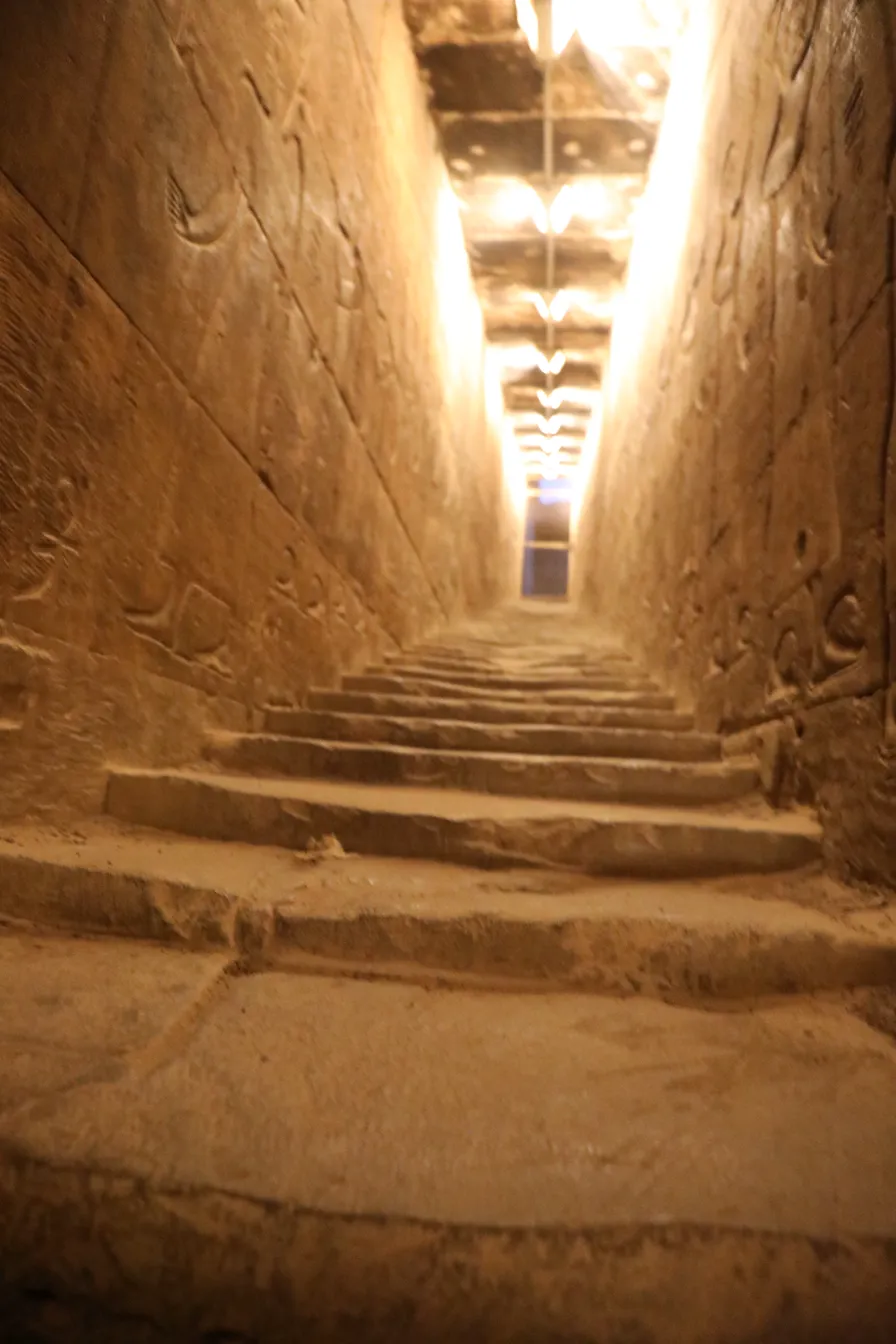
Like several major temples along the Nile, Edfu contains a Nilometer, an ancient structure used to measure the river's annual flood levels.
The information gathered here helped priests predict agricultural harvests and determine taxes, demonstrating the close relationship between religion, science, and everyday life in ancient Egypt.
The Falcon Statue of Horus
Standing near the temple entrance is a magnificent black granite statue of Horus in the form of a falcon.
This iconic statue is one of the most photographed monuments at Edfu Temple and symbolizes the protection, strength, and royal authority associated with Horus. It is an excellent place for visitors to take memorable photographs.
The Roof and Upper Chambers
Some sections of Edfu Temple allow visitors to explore the upper levels and rooftop areas, offering spectacular views of the temple complex and the surrounding landscape.
These chambers were once used by priests during important religious ceremonies and festivals.
The Myth of Horus and Seth
One of the reasons Edfu Temple became one of the most sacred places in ancient Egypt is its close connection to the legendary battle between Horus and Seth, one of the most important stories in Egyptian mythology.
According to ancient tradition, Osiris, the wise king of Egypt, was murdered by his jealous brother Seth, who wanted to rule the kingdom. After Osiris' death, his wife Isis used her magical powers to restore him briefly, allowing her to conceive their son, Horus.
Horus was raised in secret to protect him from Seth. When he became an adult, he challenged Seth for the throne of Egypt. According to temple inscriptions, one of the decisive battles took place at Edfu, where Horus defeated Seth and restored justice and order to the land.
This victory symbolized the eternal triumph of good over evil, order over chaos, and legitimate kingship over tyranny. For this reason, every Egyptian pharaoh was regarded as the earthly representative of Horus, and Edfu became one of the kingdom's most important religious centers.
The walls of Edfu Temple preserve detailed inscriptions describing these legendary battles, religious ceremonies, and annual festivals. These texts are among the most complete sources of ancient Egyptian mythology and provide historians with invaluable insights into the beliefs of the ancient Egyptians.
One of the temple's most important celebrations was the Festival of the Beautiful Reunion. During this annual event, the goddess Hathor traveled by sacred boat from Dendera Temple to visit Horus at Edfu. The festival included processions, music, offerings, prayers, and celebrations that strengthened the symbolic union between the two deities.
Today, visitors can still admire the beautifully carved scenes illustrating these myths, making Edfu Temple not only an architectural masterpiece but also one of the best places to understand ancient Egyptian religion.
Visitor Information
Location
Edfu Temple is located in the city of Edfu, approximately:
- 110 km (68 miles) north of Aswan.
- 65 km (40 miles) north of Kom Ombo.
- 120 km (75 miles) south of Luxor.
The temple is one of the most popular stops on Nile Cruises traveling between Luxor and Aswan.
Opening Hours
Edfu Temple is generally open every day.
Opening Hours
- Daily: 6:00 AM – 5:00 PM
Opening hours may vary during public holidays or special events.
Tickets
Entrance fees are set by the Egyptian Ministry of Tourism and Antiquities and may change over time.
Ticket categories generally include:
- International adults.
- International students (with valid student identification).
- Egyptian citizens and residents.
Best Time to Visit
The best time to visit Edfu Temple is between October and April, when temperatures are cooler and more comfortable.
For the best experience:
- Visit early in the morning before large tour groups arrive.
- Late afternoon offers beautiful lighting for photography.
- Avoid midday during the summer months due to high temperatures.
How Long Should You Spend at Edfu Temple?
Most visitors spend 1.5 to 2 hours exploring the temple.
History enthusiasts and photographers may wish to allow extra time to appreciate the intricate carvings, monumental architecture, and detailed inscriptions.
How to Get to Edfu Temple
Visitors can reach Edfu Temple by:
- Nile Cruise between Luxor and Aswan.
- Private car or taxi.
- Guided day tours.
- Egypt tour packages
A popular itinerary combines:
- Kom Ombo Temple.
- Edfu Temple.
- Philae Temple.
- Karnak Temple.
- Valley of the Kings
Travel Tips for Visiting Edfu Temple
To make the most of your visit:
- Wear lightweight, comfortable clothing.
- Choose comfortable walking shoes.
- Bring sunscreen, sunglasses, and a hat.
- Carry drinking water, especially during warmer months.
- Hire a licensed Egyptologist guide to better understand the temple's remarkable history and mythology.
- Visit early in the day to avoid crowds and enjoy cooler temperatures.
- Take time to admire the black granite falcon statue and the beautifully preserved hieroglyphic inscriptions.
These simple tips will help ensure a memorable visit to one of the finest preserved temples in ancient Egypt.
Conclusion
Edfu Temple is one of the greatest surviving masterpieces of ancient Egyptian architecture and a remarkable testament to the skill, devotion, and artistic achievements of the Ptolemaic period. Dedicated to Horus, the powerful falcon-headed god, the temple offers visitors an extraordinary opportunity to experience an ancient Egyptian temple almost exactly as it appeared more than two thousand years ago.
From its towering entrance pylon and magnificent hypostyle hall to the sacred sanctuary and beautifully preserved hieroglyphic inscriptions, every part of Edfu Temple tells the story of Egypt's rich religious traditions and enduring cultural heritage. The temple's connection to the legendary battle between Horus and Seth further enhances its historical and spiritual significance.
Whether you are traveling on a Nile Cruise, exploring Upper Egypt, or following a comprehensive Egypt Tour Package, Edfu Temple is an essential stop. Combined with nearby attractions such as Kom Ombo Temple, Philae Temple, Karnak Temple, Luxor Temple, and the Valley of the Kings, it provides an unforgettable journey through the heart of ancient Egypt.