

Luxor Temple
Overview
Located on the east bank of the Nile River in the heart of Luxor, Luxor Temple is one of the most impressive and best-preserved monuments of ancient Egypt. Unlike many Egyptian temples that were dedicated to a specific god or built as royal tombs, Luxor Temple was primarily constructed as a sacred place celebrating the renewal of kingship and the divine power of the pharaoh.
Built mainly during the reign of Amenhotep III in the 18th Dynasty and expanded by great rulers such as Tutankhamun, Horemheb, and Ramses II, the temple reflects centuries of architectural development and religious tradition. Every pylon, column, statue, and inscription tells the story of Egypt's powerful New Kingdom and its devotion to the god Amun-Ra.
One of the temple's most remarkable features is its connection to Karnak Temple through the famous Avenue of Sphinxes, a nearly 3-kilometer ceremonial road lined with hundreds of sphinx statues. During the annual Opet Festival, priests carried the sacred barque of Amun along this avenue from Karnak to Luxor Temple, celebrating the renewal of royal authority.
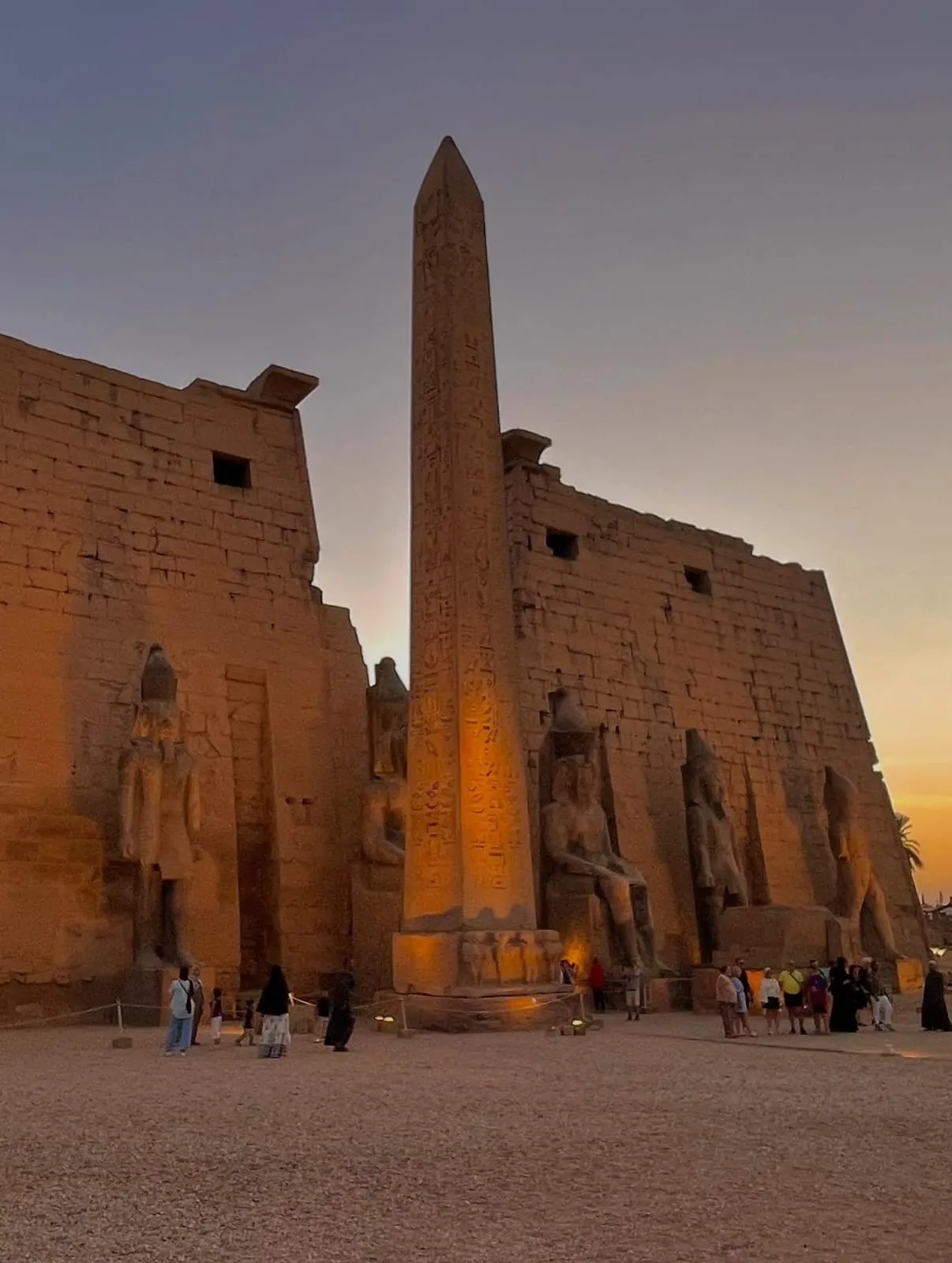
Unlike many archaeological sites that close before sunset, Luxor Temple is equally breathtaking during the evening when its illuminated columns and statues create a magical atmosphere. This makes it one of the highlights of Luxor Tours, Private Egypt Tours, Egypt Tour Packages, and Nile Cruise Packages, attracting visitors from around the world.
Recognized as part of the UNESCO World Heritage Site of Ancient Thebes with its Necropolis, Luxor Temple remains one of Egypt's greatest architectural treasures and an essential stop for anyone exploring the wonders of Upper Egypt.
History of Luxor Temple
Construction of Luxor Temple began around 1392 BC during the reign of Pharaoh Amenhotep III, one of the most successful rulers of the New Kingdom. Designed as a grand ceremonial temple dedicated to the Theban Triad—Amun, Mut, and Khonsu—the temple played a central role in Egypt's religious life.
Unlike Karnak Temple, which functioned as the main religious center, Luxor Temple was closely associated with royal ceremonies, particularly the Opet Festival, one of the most important celebrations in ancient Egypt. During this festival, the statues of the gods were carried in a magnificent procession from Karnak Temple to Luxor Temple along the Avenue of Sphinxes, where rituals reaffirmed the divine right of the pharaoh to rule.
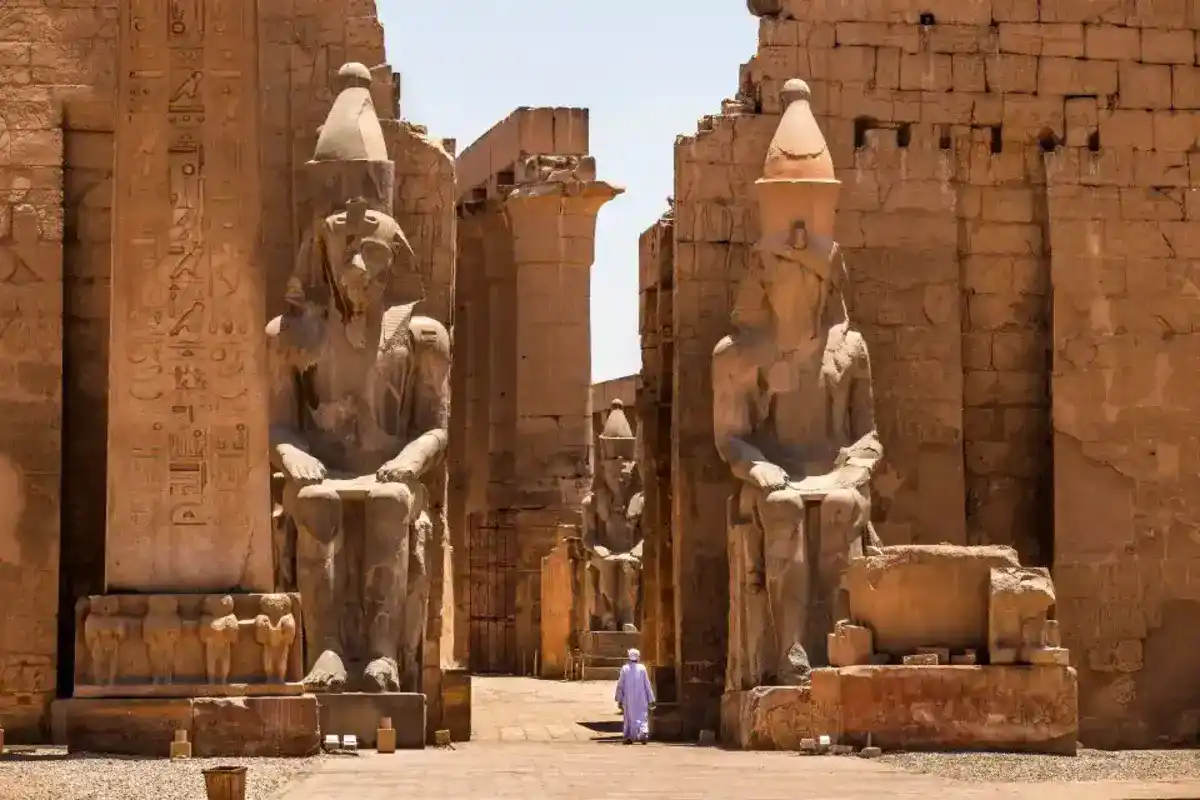
Over the centuries, many rulers added their own contributions to the temple. Tutankhamun completed parts of the magnificent colonnade, while Horemheb decorated many of its walls with beautifully carved reliefs. Later, Ramses II expanded the entrance by constructing the massive first pylon, colossal seated statues, and towering obelisks that still impress visitors today.
During the Roman period, the temple was converted into a military fortress, and several parts of the complex were adapted for new purposes. In later centuries, churches were built within the temple walls, reflecting the spread of Christianity throughout Egypt. Following the arrival of Islam, the Abu Haggag Mosque was constructed inside the temple complex and remains an active place of worship today, symbolizing the site's continuous religious significance for more than three thousand years.
The rediscovery and excavation of Luxor Temple during the 19th and 20th centuries revealed one of Egypt's most extraordinary monuments. Today, ongoing conservation projects continue to preserve its magnificent reliefs, colossal statues, and towering columns for future generations.
The Great Pylon of Ramses II
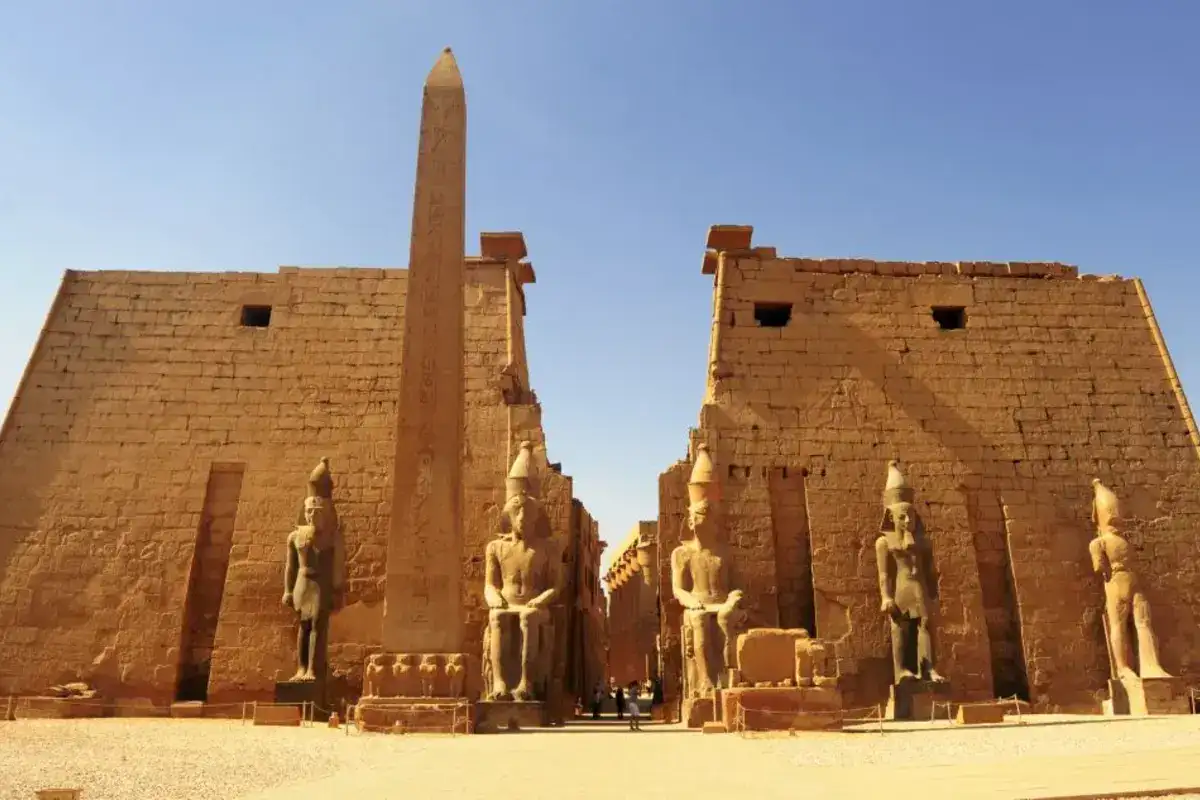
One of the first features visitors notice when entering Luxor Temple is the magnificent First Pylon, built by Pharaoh Ramses II during the 19th Dynasty. This massive gateway forms the impressive entrance to the temple and reflects the power and ambition of one of Egypt's greatest rulers.
The walls of the pylon are decorated with detailed reliefs depicting the famous Battle of Kadesh, one of the largest chariot battles of the ancient world. These scenes celebrate Ramses II's military achievements and emphasize his strength as Egypt's protector. Standing before the entrance are six colossal statues of Ramses II, although only some remain today. These monumental sculptures continue to impress visitors more than 3,200 years after they were carved.
For many travelers joining Luxor Tours or Egypt Tour Packages, the First Pylon provides an unforgettable introduction to one of Egypt's most remarkable temples.
The Obelisks of Luxor Temple
Originally, two magnificent granite obelisks stood in front of the First Pylon. Commissioned by Ramses II, these towering monuments symbolized the rays of the sun god Amun-Ra and demonstrated the pharaoh's devotion to the gods.
Today, only one obelisk remains at Luxor Temple. The second obelisk was gifted to France in the 19th century and now stands in the Place de la Concorde in Paris, where it remains one of the city's most famous monuments.
The surviving obelisk rises over 25 meters (82 feet) high and is carved from a single block of red granite from Aswan. Its hieroglyphic inscriptions praise Ramses II and commemorate his reign.
The Colonnade of Amenhotep III
Beyond the entrance lies the spectacular Great Colonnade, one of Luxor Temple's most beautiful architectural features.
Built during the reign of Amenhotep III and later decorated by Tutankhamun and Horemheb, the colonnade consists of 14 enormous papyrus-shaped columns, each rising approximately 16 meters (52 feet) into the sky.
The surrounding walls are covered with beautifully preserved reliefs illustrating the famous Opet Festival. These scenes show priests carrying the sacred boats of the gods from Karnak Temple to Luxor Temple while musicians, dancers, soldiers, and citizens celebrate this important religious event.
Walking through the colonnade is one of the highlights of any visit, allowing visitors to appreciate the scale and elegance of New Kingdom architecture.
The Court of Ramses II
After passing through the First Pylon, visitors enter the spacious Court of Ramses II, surrounded by impressive double rows of papyrus columns.
The courtyard served as a gathering place for priests and worshippers during religious ceremonies. Colossal seated statues of Ramses II dominate the space, reinforcing his image as the divine ruler of Egypt.
Today, the courtyard creates a striking contrast between ancient and modern history, as it also contains the historic Abu Haggag Mosque, which has remained an active place of worship for centuries.
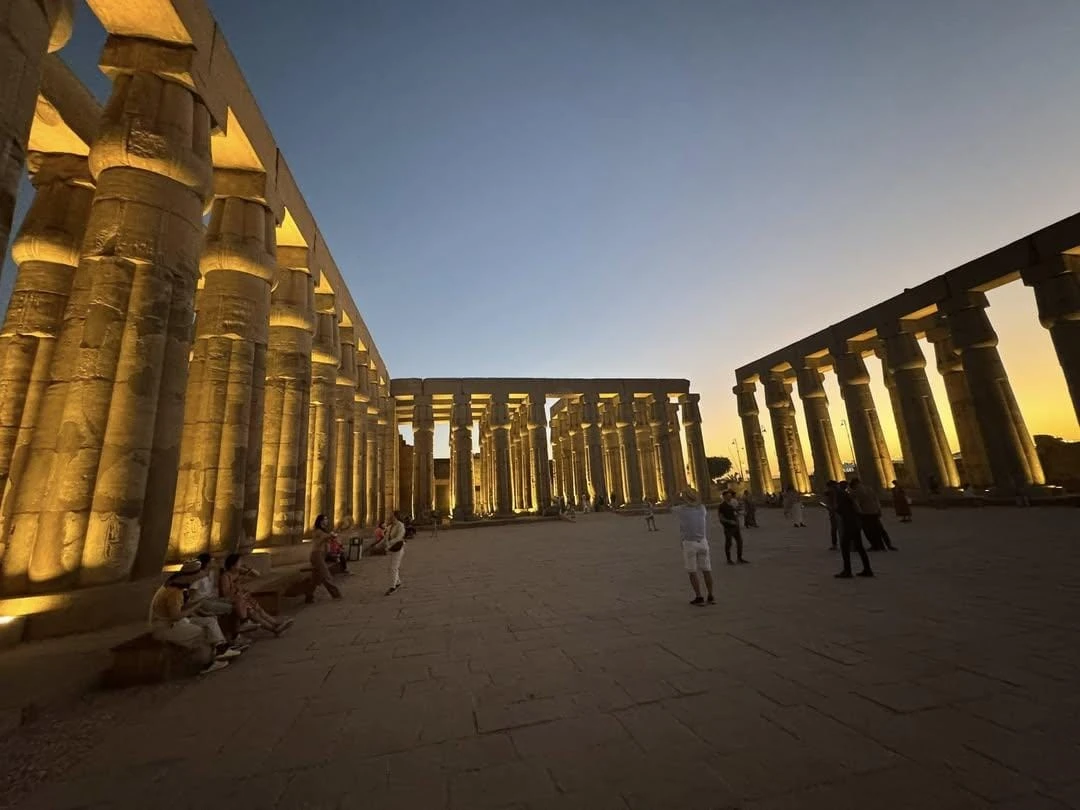
The Court of Amenhotep III
Beyond the Great Colonnade lies the elegant Court of Amenhotep III, a peaceful open courtyard surrounded by beautifully proportioned columns.
This section of the temple demonstrates the refined architectural style of Amenhotep III's reign, often regarded as the golden age of the New Kingdom. The harmony and symmetry of the courtyard showcase the remarkable engineering skills of ancient Egyptian builders.
The court originally hosted important religious rituals associated with the worship of Amun, Mut, and Khonsu, the Theban Triad.
The Sanctuary of Amun-Ra
At the heart of Luxor Temple lies the sacred sanctuary dedicated to Amun-Ra, the chief deity of ancient Thebes.
This was the most sacred area of the temple, accessible only to the high priests and the pharaoh. Here, sacred rituals and daily offerings were performed to honor Amun and ensure the prosperity of Egypt.
The sanctuary once housed the sacred barque of Amun, which arrived during the annual Opet Festival after its ceremonial journey from Karnak Temple along the Avenue of Sphinxes.
Although parts of the sanctuary were modified during later periods, visitors can still admire many original reliefs and architectural details.
The Avenue of Sphinxes
One of Luxor Temple's most remarkable features is its connection to Karnak Temple through the famous Avenue of Sphinxes.
Stretching for nearly 3 kilometers (1.7 miles), this ceremonial road is lined with hundreds of beautifully carved sphinx statues.
The avenue was used during the annual Opet Festival, when priests carried the sacred boats of the gods between the two temples in one of ancient Egypt's most important religious celebrations.
Following years of excavation and restoration, the Avenue of Sphinxes has once again become one of Luxor's most spectacular attractions and is frequently included in Luxor Tours, Private Egypt Tours, and Egypt Tour Packages.
Abu Haggag Mosque
One of the unique features of Luxor Temple is the Abu Haggag Mosque, built during the 13th century directly within the ancient temple complex.
Unlike many historical monuments, the mosque remains an active place of worship today, demonstrating the site's continuous religious importance for more than three thousand years.
Its elevated position reflects centuries of accumulated sand that once buried much of the temple before archaeological excavations uncovered the ancient structures below.
The coexistence of an Islamic mosque within a pharaonic temple makes Luxor Temple one of the most fascinating examples of Egypt's layered history.
Interesting Facts About Luxor Temple
- Luxor Temple is more than 3,300 years old.
- Construction began under Amenhotep III and was expanded by Tutankhamun, Horemheb, and Ramses II.
- It was dedicated to the Theban Triad: Amun, Mut, and Khonsu.
- The temple is connected to Karnak Temple by the restored Avenue of Sphinxes.
- One of its original obelisks now stands in Paris, France.
- The Abu Haggag Mosque has been an active place of worship for centuries within the temple complex.
- Luxor Temple is especially beautiful after sunset, when its illuminated columns and statues create a magical atmosphere.
- It forms part of the UNESCO World Heritage Site of Ancient Thebes with its Necropolis.
Planning Your Visit to Luxor Temple
Visiting Luxor Temple is one of the highlights of any trip to Egypt. Located in the heart of modern Luxor on the east bank of the Nile, the temple is easily accessible and can be explored during the day or after sunset. While its towering columns and colossal statues are impressive at any time, the beautifully illuminated temple at night creates a truly unforgettable atmosphere.
Many travelers visit Luxor Temple as part of Luxor Tours, Private Egypt Tours, Egypt Tour Packages, and Nile Cruise Packages. It is often combined with Karnak Temple, the Temple of Hatshepsut, and the Valley of the Kings, offering a complete introduction to the wonders of ancient Thebes.
Opening Hours
Luxor Temple is open daily throughout the year.
Summer (April – September)
7:00 AM – 9:00 PM
Winter (October – March)
7:00 AM – 8:00 PM
Opening hours may vary during public holidays or special events.
Ticket Information
An entrance ticket is required to visit Luxor Temple.
Ticket prices are updated periodically by the Egyptian authorities. Students may be eligible for discounted admission with a valid student ID.
Many Luxor Tours, Private Egypt Tours, and Egypt Tour Packages include entrance fees, transportation, and the services of a licensed Egyptologist guide, making your visit more enjoyable and informative.
Best Time to Visit
The best time to visit Luxor Temple is between October and April, when temperatures are cooler.
For the best experience:
- Visit early in the morning for fewer crowds.
- Return after sunset to see the temple beautifully illuminated.
- Allow 1–2 hours to explore the site.
- Combine your visit with Karnak Temple and the Avenue of Sphinxes for a deeper understanding of ancient Thebes.
Evening visits are especially popular because the lighting highlights the temple's colossal statues, columns, and hieroglyphic reliefs.
How to Get There
Luxor Temple is centrally located along the Nile Corniche in downtown Luxor.
Visitors can reach the temple by:
- Walking from many hotels in central Luxor.
- Taxi or private transfer.
- Organized Luxor Day Tours.
- Private Egypt Tours.
- Excursions included in Nile Cruise Packages.
Its central location makes it one of the easiest archaeological sites in Egypt to visit.
Photography Tips
Luxor Temple is one of Egypt's most photogenic monuments.
For the best photographs:
- Visit at sunrise for soft natural light.
- Return after sunset to capture the illuminated temple.
- Photograph the massive statues of Ramses II at the entrance.
- Walk along the Avenue of Sphinxes for unique perspectives.
- Capture the towering columns of the Great Colonnade from different angles.
Always respect current photography regulations inside the archaeological site.
Visitor Tips
To make the most of your visit:
- Wear comfortable walking shoes.
- Bring water, sunscreen, sunglasses, and a hat during the day.
- Consider an evening visit for a cooler and more atmospheric experience.
- Hire a licensed Egyptologist guide to better understand the temple's history and symbolism.
- Take your time to admire the hieroglyphs, statues, and architectural details.
Nearby Attractions
Luxor Temple is surrounded by many of Egypt's most famous historical sites.
The largest religious complex ever built and connected to Luxor Temple by the famous Avenue of Sphinxes.
A beautifully restored ceremonial road that linked Luxor Temple with Karnak Temple during the ancient Opet Festival.
The royal burial ground of Egypt's New Kingdom pharaohs, including the famous Tomb of Tutankhamun.
One of the masterpieces of ancient Egyptian architecture, located beneath the cliffs of Deir el-Bahari.
Two gigantic statues of Pharaoh Amenhotep III that have guarded Luxor's West Bank for more than 3,400 years.
A modern museum displaying an exceptional collection of statues, royal mummies, jewelry, and artifacts discovered in the Luxor region.
Conclusion
Luxor Temple is one of the most remarkable monuments of ancient Egypt, combining extraordinary architecture, royal history, and deep religious significance. From the colossal statues of Ramses II and the elegant Great Colonnade to the restored Avenue of Sphinxes, every part of the temple tells the story of the New Kingdom at the height of its power.
Whether you visit during the day or experience its magical illumination after sunset, Luxor Temple offers an unforgettable journey into Egypt's ancient past. For the ultimate experience, combine your visit with Karnak Temple, the Valley of the Kings, the Temple of Hatshepsut, the Colossi of Memnon, and Luxor Museum to discover the rich heritage of ancient Thebes.
Our expertly designed Luxor Tours, Private Egypt Tours, Egypt Tour Packages, and Luxury Egypt Tours include Luxor Temple as part of carefully planned itineraries led by experienced Egyptologist guides. If you're traveling through Upper Egypt, many of our Nile Cruise Packages also feature a visit to this iconic temple, allowing you to experience one of the greatest masterpieces of ancient Egyptian civilization while exploring the timeless beauty of the Nile Valley.