

.webp)
Pyramid of Khafre
Overview
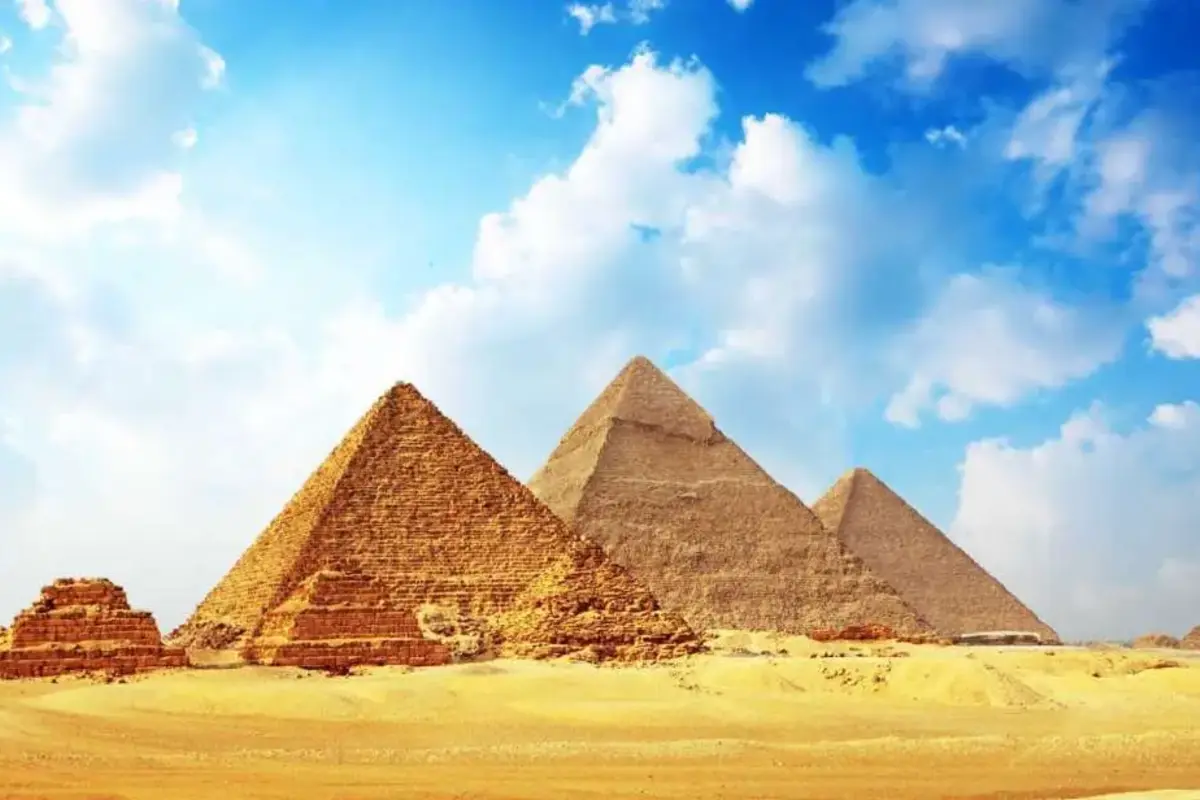
The Pyramid of Khafre is one of the most impressive monuments on the Giza Plateau and the second-largest of the three great pyramids of Giza. Built during Egypt's Fourth Dynasty for Pharaoh Khafre, the pyramid is an essential part of any visit to the ancient wonders of Cairo. Although it is slightly smaller than the nearby Great Pyramid of Khufu, its position on higher ground makes it appear almost as tall and gives it a particularly imposing presence across the desert landscape.
The Pyramid of Khafre was constructed as the centerpiece of a large royal funerary complex. The complex included a mortuary temple, a long causeway and a valley temple, reflecting the sophisticated religious traditions of ancient Egypt. The pyramid was originally covered with smooth, polished Tura limestone, and one of the most remarkable features that visitors can still see today is a surviving section of this original casing near the summit. This provides a fascinating glimpse of how the pyramid may have appeared more than 4,500 years ago when its outer surface was bright and highly polished.
A visit to the Pyramid of Khafre is normally combined with the other major monuments of the Giza Plateau. During a Giza Pyramids and Sphinx tour, travelers can explore the Great Pyramid of Khufu, the Pyramid of Khafre, the Pyramid of Menkaure and the Great Sphinx while learning about the history and purpose of each monument from a professional Egyptologist. The nearby Great Sphinx is particularly important because it forms part of the same monumental landscape and is traditionally associated with the reign of Khafre.
For travelers interested in ancient Egyptian history, the Pyramid of Khafre offers much more than an impressive photograph. Its architecture, religious purpose and connection with the wider Giza necropolis reveal the extraordinary organizational and engineering abilities of the ancient Egyptians. You can also combine your visit with the Grand Egyptian Museum as part of a private Cairo itinerary, creating an excellent opportunity to connect the monuments of ancient Giza with Egypt's remarkable archaeological collections.
Whether you are visiting Cairo for a short break or planning a longer Egypt tour package, the Pyramid of Khafre deserves a place in your itinerary. A private guided experience allows you to explore Giza at a comfortable pace while your Egyptologist explains the history, construction and mysteries surrounding this extraordinary monument.
History of the Pyramid of Khafre
The Pyramid of Khafre was constructed for Pharaoh Khafre, a Fourth Dynasty ruler and son of Pharaoh Khufu. Khafre's reign is generally dated to the 26th century BC.
Like other royal pyramids, the monument was designed as part of a funerary complex intended to support the king's journey into the afterlife. The complex connected the pyramid's upper temple with a valley temple through a long processional causeway.
The pyramid was originally covered with polished limestone, while its upper section still preserves some of this casing. Its construction demonstrates the organizational ability, engineering knowledge and craftsmanship of ancient Egyptian builders.
Pyramid of Khafre Highlights
- See the second-largest pyramid at Giza.
- Admire the surviving limestone casing at the summit.
- Explore the pyramid's exterior and surrounding complex.
- Learn about Pharaoh Khafre and Egypt's Fourth Dynasty.
- Discover the connection between the pyramid and the Great Sphinx.
- Visit the ancient valley temple associated with Khafre's complex.
- Enjoy panoramic views across the Giza Plateau.
- Combine the pyramid with the Great Pyramid and Pyramid of Menkaure.
Architecure and Construction
The Pyramid of Khafre was built from enormous limestone blocks and was originally finished with smooth polished limestone casing. Its location on higher ground contributes to its imposing appearance.
The monument was carefully aligned according to the principles used in the construction of the other Giza pyramids. Its interior contains passages and chambers designed as part of the king's funerary complex.
Although much of the original complex has disappeared or been altered over thousands of years, the surviving structures provide valuable evidence of Old Kingdom pyramid construction.
The Pyramid of Khafre and the Great Sphinx
The Pyramid of Khafre is closely associated with the Great Sphinx, which stands near the pyramid's valley temple. The Sphinx has the body of a lion and a human head and is one of the most famous monuments in Egypt.
The exact relationship between Khafre and the Sphinx remains a subject of archaeological discussion, but the monuments clearly form part of the same monumental landscape. Your Egyptologist can explain the different theories and the historical evidence during your visit.
Related Egypt Tours
- Giza Pyramids & Great Sphinx Tour.
- Cairo Day Tours.
- Grand Egyptian Museum & Giza Pyramids Tour.
- Private Cairo Tours.
- Egypt Private Tours.