

Dendera Temple | Explore Egypt's Best-Preserved Temple of Hathor
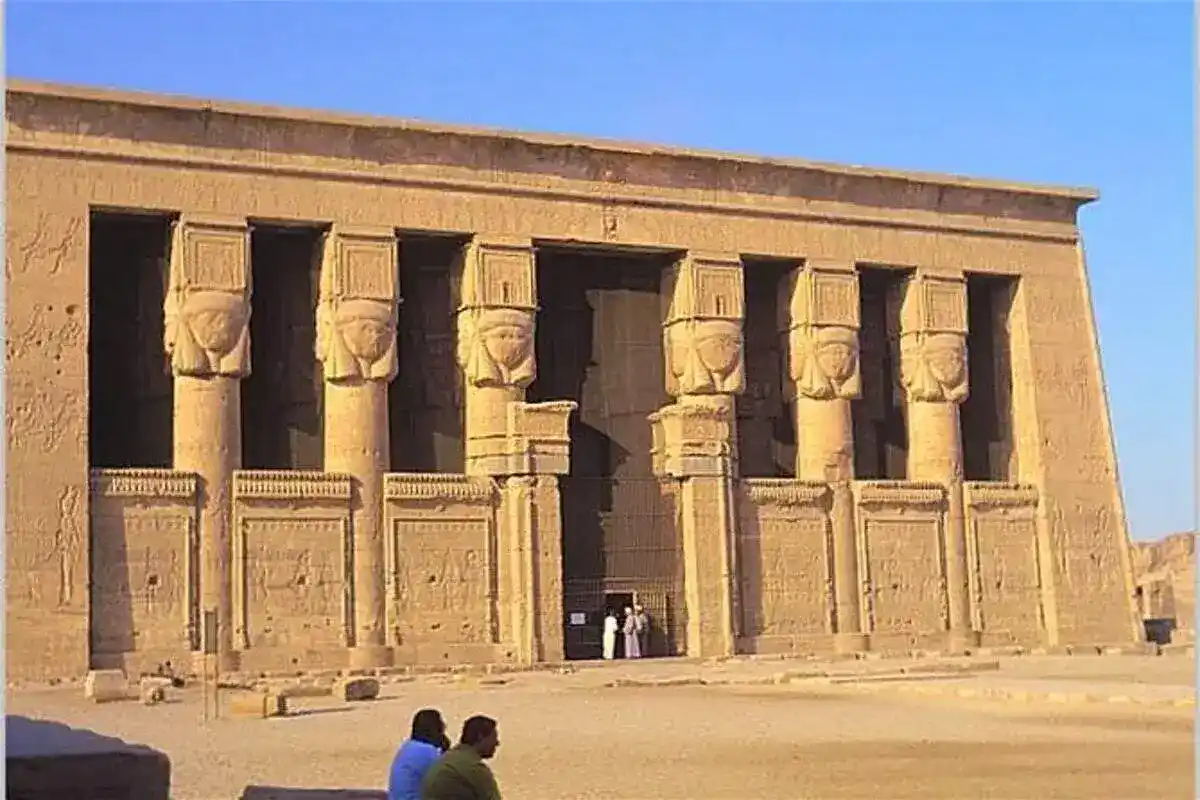
Nestled on the west bank of the Nile in Qena Governorate, approximately 60 kilometers (37 miles) north of Luxor, Dendera Temple is one of the best-preserved and most beautifully decorated temples in Egypt. Dedicated to Hathor, the ancient Egyptian goddess of love, music, motherhood, beauty, and joy, this magnificent temple offers visitors an unforgettable journey into the spiritual and artistic achievements of ancient Egypt.
Unlike many ancient monuments that have suffered extensive damage over the centuries, Dendera Temple has retained much of its original grandeur. Its massive sandstone walls, colorful ceiling reliefs, towering columns, underground crypts, rooftop chapels, and the world-famous Dendera Zodiac make it one of the country's most extraordinary archaeological sites.
Although the temple visible today was primarily built during the Ptolemaic Period and completed under the Roman emperors, Dendera had served as a sacred religious center for thousands of years before the current structure was constructed. Pilgrims from across Egypt traveled here to worship Hathor and participate in religious festivals celebrating fertility, healing, music, and renewal.
Today, Dendera Temple is one of the most rewarding day trips from Luxor and an essential stop for travelers interested in ancient Egyptian religion, architecture, astronomy, and mythology. Whether you're exploring Upper Egypt on a Nile Cruise, a private tour, or a comprehensive Egypt Tour Package, Dendera Temple promises a unique and unforgettable experience.
History of Dendera Temple
The history of Dendera Temple stretches back thousands of years, making it one of Egypt's oldest continuously used religious sites. Although the impressive temple standing today was built during the Ptolemaic Dynasty, archaeological evidence shows that worship at Dendera began as early as the Old Kingdom and continued throughout the Pharaonic, Greek, and Roman periods.
Construction of the current Temple of Hathor began during the reign of Ptolemy XII Auletes in the 1st century BC. Later rulers, including Cleopatra VII and several Roman emperors such as Augustus, Tiberius, and Trajan, added decorations, reliefs, gateways, and chapels that enhanced the temple's beauty and importance.
Dedicated to Hathor, one of the most beloved goddesses in ancient Egypt, the temple became a major pilgrimage destination where worshippers sought blessings related to love, motherhood, fertility, healing, music, and happiness. Hathor was also regarded as the protector of women and the divine mother of the pharaoh.
One of Dendera's most celebrated religious events was the annual Beautiful Reunion Festival, during which the goddess Hathor traveled by sacred boat to visit Horus at Edfu Temple. This symbolic journey celebrated the union of the divine couple and was marked by grand processions, music, feasts, and religious ceremonies along the Nile.
Over the centuries, Dendera Temple remained an important center of worship before gradually being abandoned after the spread of Christianity. Layers of sand later protected much of the structure, helping preserve its remarkable carvings, colorful ceilings, and intricate hieroglyphs for future generations.
Today, Dendera Temple stands as one of the finest examples of ancient Egyptian religious architecture and continues to captivate visitors with its exceptional preservation, artistic beauty, and historical significance.
Architecture of Dendera Temple
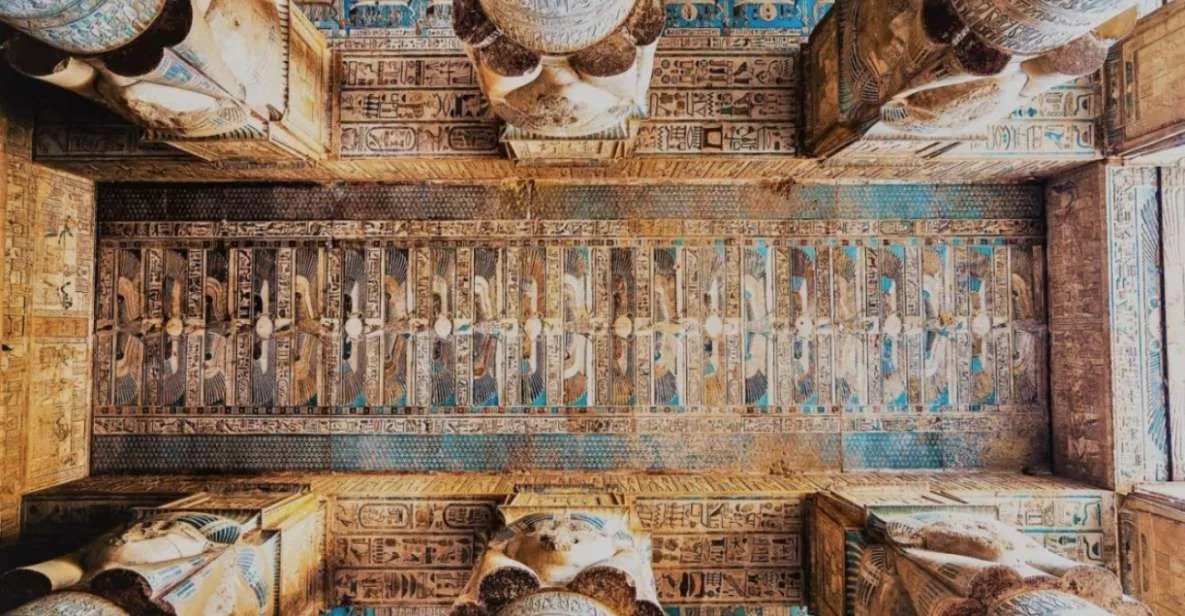
Dendera Temple is considered one of the finest examples of ancient Egyptian temple architecture and one of the best-preserved monuments from the Ptolemaic Period. Built primarily from sandstone, the temple combines traditional Egyptian religious design with Greek and Roman artistic influences, creating a masterpiece that has survived for more than 2,000 years.
Unlike many temples in Egypt, much of Dendera's original decoration remains intact. Visitors can admire beautifully carved hieroglyphs, colorful astronomical ceilings, massive columns, underground crypts, rooftop sanctuaries, and sacred chapels that reveal the extraordinary craftsmanship of ancient Egyptian builders.
The temple follows the classic layout of an Egyptian temple, beginning with a monumental entrance and leading through increasingly sacred spaces toward the sanctuary of Hathor. Every wall, ceiling, and column is covered with detailed scenes depicting religious ceremonies, offerings, astronomical symbols, and the mythology of Hathor and other Egyptian gods.
One of the temple's most remarkable features is its impressive Hypostyle Hall, supported by 24 massive columns topped with beautifully carved capitals depicting the face of the goddess Hathor. The ceiling above these columns preserves some of the most vibrant astronomical artwork found anywhere in Egypt.
Another architectural highlight is the famous Dendera Zodiac, one of the world's most celebrated ancient astronomical reliefs. Although the original circular zodiac is now displayed in the Louvre Museum in Paris, visitors can admire an accurate replica inside the temple, offering valuable insight into the astronomical knowledge of ancient Egypt.
The temple also contains underground crypts, where priests stored sacred statues, ceremonial objects, and religious treasures. These narrow passageways feature beautifully preserved reliefs that remain among the finest examples of ancient Egyptian stone carving.
Visitors can also climb to the temple's rooftop chapels, where important religious ceremonies associated with the resurrection of Osiris and the annual New Year Festival were performed. From the roof, visitors enjoy spectacular views of the temple complex and the surrounding countryside.
Together, these architectural features make Dendera Temple one of the most complete and visually impressive temples in Egypt, offering an unforgettable experience for history lovers, photographers, and anyone fascinated by ancient Egyptian civilization.
Top Things to See at Dendera Temple
Dendera Temple is filled with extraordinary monuments and hidden treasures that make it one of Egypt's most rewarding archaeological sites.
The Great Hypostyle Hall
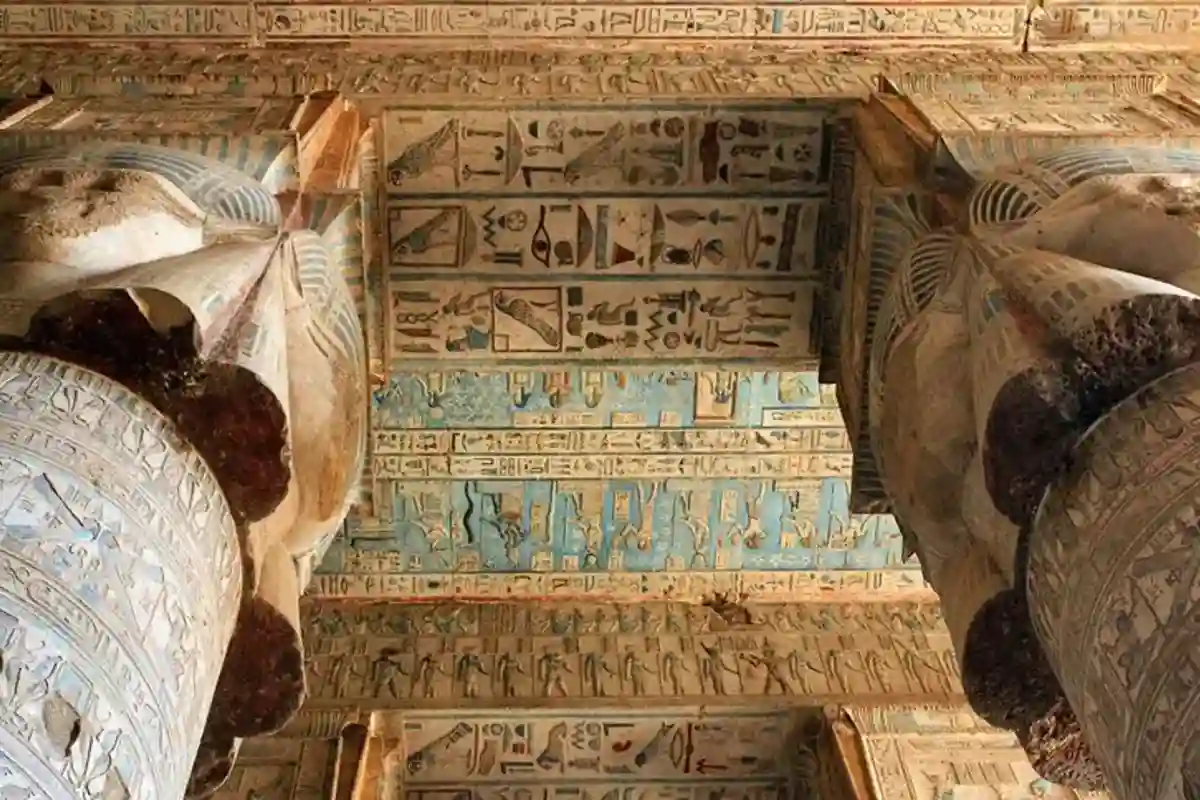
The magnificent Hypostyle Hall is the first major structure visitors encounter after entering the temple.
Its 24 towering Hathor-headed columns support an impressive stone ceiling decorated with colorful astronomical scenes, constellations, vultures, and sacred symbols. Many of the original colors remain visible today, making this one of the most beautiful temple halls in Egypt.
The Temple of Hathor
At the heart of the complex stands the Sanctuary of Hathor.
This sacred chamber once housed the cult statue of the goddess and served as the spiritual center of the temple. Only priests and the pharaoh were permitted to enter this holy space during religious ceremonies.
The Dendera Zodiac
One of the temple's greatest attractions is the famous Dendera Zodiac.
This remarkable astronomical relief illustrates the twelve zodiac signs, planets, constellations, and celestial bodies, demonstrating the advanced astronomical knowledge of ancient Egypt.
Although the original zodiac is displayed in the Louvre Museum in France, an excellent replica remains inside the temple, allowing visitors to appreciate its extraordinary detail.
The Rooftop Chapels
Visitors can climb the ancient staircases leading to the rooftop chapels, where priests celebrated important festivals connected to Osiris, resurrection, and the Egyptian New Year.
These chapels offer breathtaking panoramic views over the temple complex and the surrounding Nile Valley.
The Underground Crypts
Hidden beneath the temple are a series of narrow underground crypts.
These chambers were used to store sacred statues, ritual objects, and temple treasures. Their walls contain exceptionally well-preserved carvings depicting religious ceremonies and divine figures.
The Mammisi (Birth House)
Located beside the main temple is the beautifully decorated Mammisi, or Birth House.
This smaller temple celebrates the divine birth of Ihy, the son of Hathor and Horus, and features elegant reliefs illustrating scenes of motherhood, birth, and renewal.
The Sacred Lake
Like many important Egyptian temples, Dendera contains a Sacred Lake where priests performed purification rituals before entering the temple.
Although no longer used for religious ceremonies, the lake remains an important feature of the temple complex and provides insight into ancient Egyptian temple traditions.
Roman Gateway and Reliefs
Several Roman emperors, including Trajan and Tiberius, contributed to Dendera Temple by adding beautifully carved gateways and decorative reliefs.
These additions highlight the continued importance of the temple during the Roman occupation of Egypt and showcase the blend of Egyptian and Roman artistic traditions.
Religious Importance of Dendera Temple
For more than two thousand years, Dendera Temple was one of the most important religious centers in ancient Egypt. Dedicated to Hathor, the goddess of love, beauty, motherhood, music, joy, and healing, the temple welcomed pilgrims from across the country seeking blessings, protection, and divine guidance.
Hathor was among the most beloved deities in ancient Egyptian religion and was often called the "Lady of Heaven" and the "Mistress of the West." She was believed to protect women, watch over mothers and children, inspire musicians, and accompany the dead into the afterlife. Her influence can also be seen in other famous temples, including Philae Temple, where the worship of the goddess Isis shared similar religious traditions.
Every year, Dendera celebrated one of Egypt's most important religious festivals—the Beautiful Reunion Festival. During this sacred event, the statue of Hathor traveled along the Nile to visit Horus at Edfu Temple. Thousands of pilgrims gathered to witness the procession, participate in ceremonies, and celebrate the symbolic union of the divine couple. Today, many travelers include both Dendera Temple and Edfu Temple in their Egypt Tour Packages to better understand this remarkable tradition.
The temple also played a significant role in astronomy and religious ceremonies linked to the stars. Priests observed celestial events from the rooftop chapels and used astronomical knowledge during festivals and rituals. The famous Dendera Zodiac, now one of Egypt's best-known ancient astronomical masterpieces, reflects this close relationship between religion and science. Visitors interested in Egyptian history often continue their journey to the Grand Egyptian Museum and the National Museum of Egyptian Civilization (NMEC) to explore additional artifacts connected to ancient beliefs.
Because of its exceptional preservation, Dendera Temple provides one of the clearest pictures of daily religious life in ancient Egypt. Combined with visits to Karnak Temple, Luxor Temple, Abydos Temple, and the Valley of the Kings, it helps visitors understand the spiritual heart of Upper Egypt.
Visitor Information
Planning ahead will help you make the most of your visit to Dendera Temple. Whether you're traveling independently, joining a Luxor Day Tour, or exploring Upper Egypt as part of one of our Egypt Tour Packages, Dendera is an easy and rewarding destination that can be combined with several nearby archaeological sites.
Location
Dendera Temple is located in the town of Dendera, approximately 60 km (37 miles) north of Luxor in Qena Governorate.
Its convenient location makes it one of the most popular day trips from Luxor. Many visitors combine Dendera with Abydos Temple, creating a full-day journey through two of Egypt's most significant religious centers. Travelers on Private Egypt Tours often include both sites alongside visits to Karnak Temple, Luxor Temple, and the Valley of the Kings.
Opening Hours
Dendera Temple is generally open every day.
Opening Hours
Daily: 6:00 AM – 5:00 PM
Opening hours may vary during public holidays or special events, so it's advisable to confirm the latest schedule before your visit.
Tickets
Entrance fees are set by the Egyptian Ministry of Tourism and Antiquities and may change over time.
Ticket categories typically include:
- International adults.
- International students (with a valid student ID).
- Egyptian citizens and residents
Many Luxor Day Tours and Historical Egypt Tours include entrance tickets and transportation, making it easy to explore the temple with an experienced Egyptologist guide.
Best Time to Visit
The best time to visit Dendera Temple is between October and April, when the weather is cooler and ideal for sightseeing.
For the best experience:
- Arrive early in the morning for fewer crowds.
- Visit in the late afternoon for beautiful natural light.
- Avoid midday during the summer months when temperatures can exceed 40°C (104°F).
If you're planning a longer holiday, consider combining Dendera with attractions such as Medinet Habu Temple, the Colossi of Memnon, and the Temple of Hatshepsut during your stay in Luxor.
How Long Should You Spend at Dendera Temple?
Most visitors spend 2 to 3 hours exploring the temple complex.
History enthusiasts and photographers may wish to spend longer admiring the colorful ceilings, the Dendera Zodiac, underground crypts, rooftop chapels, and the beautifully preserved reliefs. Many guests traveling on Luxury Egypt Tours or Private Egypt Tours choose to combine Dendera with Abydos Temple for a full day of exploration.
How to Get to Dendera Temple
Visitors can reach Dendera Temple by:
- Private car or taxi from Luxor.
- Guided Luxor Day Tours.
- Private Egypt Tours.
- Multi-day Egypt Tour Packages.
Although Dendera is not located directly on the standard Nile Cruise Packages itinerary, many cruise travelers arrange an optional excursion from Luxor before or after their cruise. It is also frequently paired with Abydos Temple for travelers interested in ancient Egyptian religion.
Travel Tips for Visiting Dendera Temple
To make the most of your visit:
- Wear comfortable walking shoes, as you'll spend time exploring large stone courtyards and temple halls.
- Bring sunscreen, sunglasses, and a hat, especially between May and September.
- Carry drinking water during warmer months.
- Hire a licensed Egyptologist guide to understand the fascinating symbolism behind the Dendera Zodiac, the temple reliefs, and the worship of Hathor.
- Don't miss the rooftop chapels and underground crypts, which are among the most unique features of any ancient Egyptian temple.
- If your schedule allows, combine your visit with Abydos Temple for a deeper understanding of ancient Egyptian religious beliefs.
- Continue your journey through Upper Egypt by visiting Karnak Temple, Luxor Temple, the Valley of the Kings, Medinet Habu Temple, and the Colossi of Memnon, all of which are featured in our Luxor Day Tours and Historical Egypt Tours.
Conclusion
Dendera Temple is one of Egypt's most remarkable archaeological treasures, offering an unforgettable journey into the world of ancient Egyptian religion, art, and architecture. Dedicated to Hathor, the beloved goddess of love, music, beauty, and motherhood, the temple stands as one of the finest preserved monuments from the Ptolemaic Period.
From the magnificent Hypostyle Hall and the world-famous Dendera Zodiac to its underground crypts, rooftop chapels, and beautifully preserved reliefs, every corner of the temple reveals the extraordinary skill and devotion of ancient Egyptian craftsmen. Its peaceful setting and outstanding preservation make it one of the most rewarding destinations in Upper Egypt.
Whether you're exploring Luxor Day Tours, enjoying one of our Egypt Tour Packages, or traveling on a Private Egypt Tour, Dendera Temple is an essential stop. For an even richer experience, combine your visit with Abydos Temple, Karnak Temple, Luxor Temple, the Valley of the Kings, Temple of Hatshepsut, Medinet Habu Temple, and the Colossi of Memnon to discover the timeless wonders of ancient Egypt.